Showing posts sorted by relevance for query Europe. Sort by date Show all posts

Wednesday, June 5, 2013

Brussels, Belgium

BRUSSELS, BELGIUM
Experience authentic European culture at the heart of Europe!

By Laura Baeyens

Neighboring the prominent European countries the whole world has come to love is a small country known for its mouth-watering chocolates and beers, Belgium. In its heart lies the city of Brussels, the headquarters of the European Union and the cultural center of the continent. It is the ideal place to be if you want to experience everything Europe has to offer in just a few days. Walking the streets of Brussels will give you an exquisite taste of diversity and a past-meets-present experience you will never forget.

This captivating city in a nutshell is a blend of traditional and contemporary European architecture, art, fashion, food, and music. The mix of old and new in every corner will leave you in a state of trance and nostalgia where time stands still and the past, present, and future collide. Brussels is also a melting pot of languages. French and Dutch are the official languages which are music to the ears.

Where to go?

Most of the must-sees in Brussels can be reached by foot, how convenient! Public transportation is also very accessible. There are affordable city tour buses which you can take. The first thing to visit is the symbol of Brussels and Belgium, the Atomium. It was constructed for the 1958 World Exhibition and is known as a modern marvel in architecture. From the name itself, this iconic building is modeled to an enlarged elementary iron crystal.

Want to tour Amsterdam, Berlin, London, and Paris in one day? Luckily, just a few steps away from the Atomium you will find Mini-Europe. This park gives you a tour of all the famous cities and attractions in Europe in just a few hours! There are about 350 elaborately-crafted models of different European landmarks.

What makes Europe immortal? It’s architecture of course! Have a look at baroque and gothic buildings and houses around Grand Place. There you will find the Town Hall with its sharp and narrow spire and its beautiful interior. Somewhere in the corners of the Grand Place is the famed statue of a boy peeing in a fountain, the Manneken Pis. The locals have several amusing legends to share behind this iconic statue. What’s most comical about this attraction is

Monday, June 17, 2013

Rome, Italy, Europe

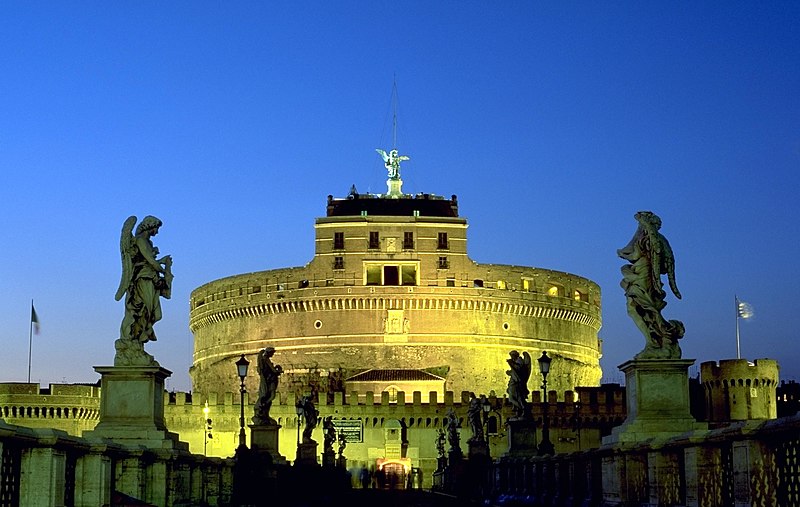
Rome, Italy


Roma caput mundi (Rome, the head of the world)

by Vincenzo Mele

History

Rome was found in 753 B.C. , where the river Tiber flows into the Tyrrhenian Sea. This made it  a very important communication node. It is also shielded from the Apennines mountains, making the climate very good.
These facts convinced the first shepherds and traders to establish himself in Rome. Then, thanks to an impressive military force, Rome expands its territory, from Italy to Europe, Africa and Asia (America had not been discovered yet !).

Since 1870  Rome is the capital of Italy, having a population of about 3 millions.


Be aware.
 When you arrive in Rome, landing at Fiumicino airport (or Ciampino airport) ,  a lot of people will ask you to drive you to the city center. TAKE ONLY A REGULAR TAXI  (white car) . The cost of transportation from airport IS FIXED and is written on the door of the car.

What to see
Rome has too many thinks to see. It's impossible to see all, also if you stay long time. So it's better to plan where to go, discarding other thinks to be saw next time.

Following list show  neighboring sites. It  will help you to save time:

1 Colosseo  (Colosseum) ,  Foro Romano , Chiesa di San Pietro in Vincoli (this Church is not the more known San Peter Basilica (= big Church) in Vatican city)

2 San Peter Basilica , Cappella Sistina and Musei Vaticani

3 Piazza Navona

4 Trastevere, where you can eat well and cheaply .

Rome has a lot of churches. Inside each you can find almost  always pictures, statues , etc of very important artists.

Parks
Most important Rome parks are:

1 Villa Borghese, near to famous via Veneto. Inside there is the Museo Borghese, with the statue of Paolina Borghere (sister of Napoleon)

2 Villa Ada

3 Villa Doria- Panphili


Transportation
One of the bad aspects of Rome are public transportation

Sunday, June 2, 2013

Madrid, Spain

\About Madrid, Spain, Europe

By Aurora Ferrero

Madrid is the capital of Spain, a very European city with lots of monuments to see around, most of them from 17th to 18th centuries, a typical gastronomic culture to taste and enjoy and a varied cultural agenda for the most artistic people.

Without doubt, a walking sightseeing of Madrid should start from “Puerta del Sol” (“Sun Tower”),
which is considered the most central  place of the city, actually us Spaniards know it as “kilometer 0”. Also “Puerta del Sol” is the place in where every 31st of December Spaniards  meet to take the famous “twelve grapes”. This is perhaps the most typical tradition of our country, since this tradition only takes place in here. When you reach the place you’ll see a building with a clock on its top. Now this building belongs to the City Coulcil. That clock is in charge to announce the comming of the New Year and the tradition is based on taking one grape per ring at 12 am o’clock.

In “Puerta del Sol” you will also see the sculture of “El oso y el madroño” (“The bear and the arbutus”), which is the symbol of Madrid. At this point, we just need to wander around the most shopping streets of Madrid: Preciados, Callao, Gran Vía. In them you will be able to enjoy a shopping time in the most popular brands. Furthermore, “Gran Vía” is also well known by its theaters in which the most popular musicals and comedias are performed.

Coming back to “Puerta del Sol” we can head towards “Arenal” street to reach “Sophia Queen’s theater” (“El teatro Reina Sofía”), the home of opera and ballet performances. Just behind Sophia Queen’s theater the majestic “Royal Palace” (“Palacio Real”) appears in front of us. The Royal Palace is the biggest in wester Europe and it was built under the order of the spanish King “Carlos III”. It can be visited inside and the “Change of Guard” takes place every Wednesday. On the right side of Royal Palace we can’t forget to have a look at “Sabatini Gardens” (Jardines de Sabatini). Keeping ahead following that way there are another two beatiful places to discover: Spanish Square (“Plaza España”) and Debod Temple (“El Templo de Debod”).

However, if we take the left path at “Royal Place”, “The Almudena Cathedral” will be waiting for us. Although more austere than other European cathedrals, Almudena shouldn’t be left to be visited. At there, several steps straight down we can take “Mayor” street in order to reach “Mayor Square” (Plaza Mayor), very famous place in Madrid. On the way, I should recommend a

Wednesday, June 5, 2013

Valencia, Spain

About Valencia

By Julie Coburn


Discover Valencia – One of the Most Fascinating City’s in Southern Spain!
Anyone who visits the Mediterranean coastline in Spain should definitely have Valencia on their list of Cities to visit. This vibrant place is a wonderful mixture of old and new both in terms of culture and architecture. The first thing to note when visiting is you will need a map. Valencia is the 3rd largest City in Spain and is home to more than 800,000 people. It also boasts the fact it’s one of the largest container ports in Europe and if boats are your thing, a visit to the harbor is a must!
Sight-Seeing
For those of you that are interested in religious history, Valencia will not disappoint. Even if you’re not religious, a visit to the Valencia Cathedral is not to be missed. Nestled in the heart of the City, this building features architecture that boasts the rich history this part of Spain has to offer.
You will find Romanesque, Gothic and Baroque styles with every step you take. Most famously, the Santo Caliz Chapel is said to house the “Holy Grail” (what some believe to be the cup that Jesus and his followers drank from at the Last Supper).
If art interests you, a visit to the Saint Francis Borja Chapel will treat you to a famous painting by Goya. For those of you that like a view the bell tower, also called Miguelete or Micalet is the true landmark of Valencia. From the top it’s possible to take in the view of the whole city.
After you have taken in the sites of the Cathedral and the surrounding areas of the old town, it’s well worth a visit to the City of Arts and Sciences. This is the complete opposite to many other landmarks in Valencia because it looks almost space-age. It was designed by an architect called Santiago Calatrava and is one of the most eye-catching sights to be found in this great City.
There are five magnificent buildings. The first is the Palau de le Arts Reina Sofia (the Opera House) and doesn’t look unlike the Sydney Opera House. After this, you’re treated to the IMAX theatre which is surrounded by a pool of cool, clear water. Next you have the Prince Felipe Science building which is a huge structure and on sunny days (of which there are many), you will need your sunglasses as this building is constructed of many plates of glass and is also surrounded by a light reflecting pool of water.

The latest addition to this spectacular tourist attraction is the Agora where many major sports events take place. We must also not forget the famous L’Oceanografic which is largely an aquarium. Built in 2002 this part of the City of Arts and Sciences is now the largest aquarium in Europe and, it’s possible to see all manner of Mediterranean fish as well as housing aquariums that represent all the World’s seas and oceans. In this part of the City it’s very easy to lose a whole day!
There are many other sites to see in Valencia. The Bullring stands proud; it’s possible to visit the Turia River, the Bioparc, La Lonja de la Seda (old silk exchange) and the Central Market which has a bewildering array of fruits and vegetables.

Eating out
This is something you will have little difficulty with. Whether you have decided to take in some of the sights or visit the beach, there are wonderful little cafes and bars to be found everywhere. Visiting Valencia and not sampling the tapas or paella on offer would seem like an insult to the locals!
Various meats and fish are also in abundance in Valencia however; do be aware the

Sofia, Bulgaria

Sofia, Bulgaria  -Europe

Picture by wiki

By Milena Alexova


Every city has its own beautiful and exciting history. We will introduce to you the sides of the capital of Bulgaria – Sofia. It is the largest city in Bulgaria and its motto is “Grows but does not age.” The city has a 7000 year history. Therefore, a unique mix of cultural layers, including all peoples who left their mark on this land - by the Thracian tribe Serds in Macedonians under Philip II and Alexander the Macedonian, Roman Trajan, Attila's Huns, the Bulgars of Khan Krum Byzantines, Crusaders, Ottomans temporary Russian rulers Battenberg monarchs, Ferdinand and Boris, the Nazis and the communist government, until today.
For cultural sightseeing, we shall begin with presenting you one of the oldest churches in Bulgaria – the church “St Sofia”. It is built in the IVth century. The city is carrying its name, because during the XIVth century it was very popular. Side of the church you can find the Monument of the Unknown Soldier and the grave of Ivan Vazov – classic poet and writer. “St Sofia” depicts the coat of arms of the city.
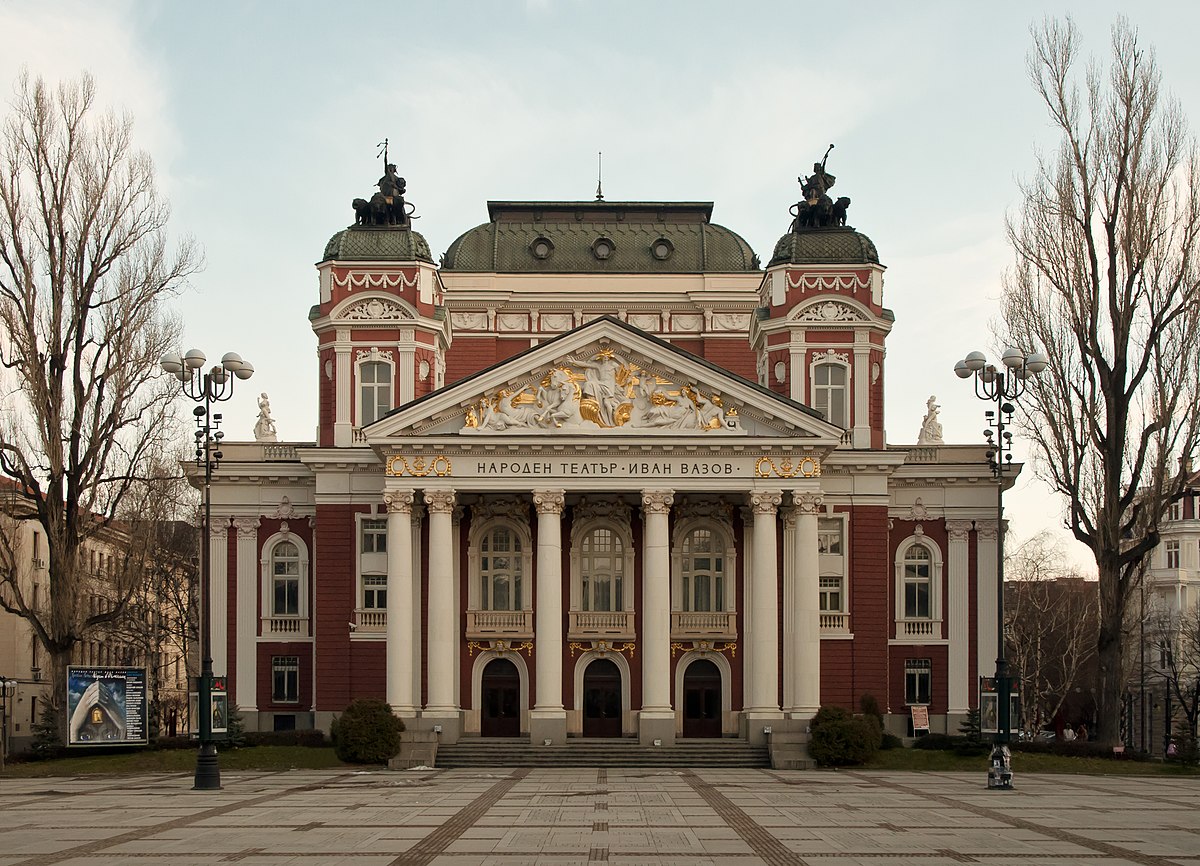
Built in 1906 by Viennese architects in neoclassical style, is the National Theatre ‘Ivan Vazov.’ It is the biggest theatre in Bulgaria and is also an architectural symbol of Sofia. It has an impressive facade is six columns supporting a triangular pediment on which depicts Apollo with the Muses of the arts. Moreover, it goes under the name of the famous Bulgarian poet and writer who we already introduced - Ivan Vazov.
Another influential building in Sofia is the National Art Gallery which is very close to the National Theatre ‘Ivan Vazov.’ The National Gallery is created in 1948. It is situated in part of the former princely palace of Alexander Battenberg. It is made in order to exhibit the most valuable works of Bulgarian artists and sculptors.
If you are a booklover, the right place for you to visit it Square ‘Slavejkov.’ This is an open bookstore where you can find everything - from books and textbooks to CD's and video games. It is named after the Bulgarian writer, journalist and politician Petko Racho Slavejkov.
Last but not least are the museums. There is a wide variety of museums depending on what your preferences are. For example, you can visit the National Museum of Military History – a military, research and educational institute; the National Museum ‘Earth and Man’ – a mineralogical museum with over 20 000 exhibited crystals and minerals from all over the world; National Anthropological Museum where you can find many reconstructed images of

Monday, June 10, 2013

Pula, Croatia, Europe

Pula, Croatia, Europe

-  A place to visit and remember –

By Vesna Ivetić

Pula is a Croatian city situated in peninsula Istria on the Eastern Adriatic coast and counts a population of around 60 000. The climate here is between mild Continental and Mediterranean, and because of the proximity of the sea the summers aren't as warm as in the continent.
There are numerous attractions of this city and the surrounding area, starting from its natural beauties with Mediterranean vegetation, clear sea and a great number of, mainly rocky, beaches; there are numerous historical sites that need to be seen, especially from the Roman era; the gastronomic offer has developed in the last decade together with the winemaking; and last but not least there is a huge number of various events that start in the spring, peak in the summer, and last until late fall. The beauties of Pula and Istria have been recognized by the National Geographic Traveler whose editors have selected Istria as one of the top 10 world destinations.

Transport to and within Pula
If you look at a map, Pula is right across the sea to Italian Venice, so if you travel from that direction you can easily come by a ferry boat (but be careful and check the timetables because they aren't the same throughout the year). You can travel by road in an organized tour or your private vehicle using a highway and a semi highway (or if you prefer, you can travel through the picturesque countryside taking the old road and also avoid traffic in the high season). Pula has a train station, but personally I would recommend using these not exactly high-tech trains for slow local field trips instead of means of transportation. And in the end, Pula has an airport in the nearby village Valtura. On their internet page you can find all of the necessary information.
Once you get to Pula, I recommend using public transportation (yellow city Pulapromet buses) to avoid traffic that can be a little chaotic in the high season. A little tip: in the city center Giardini go to the first news stand coming from Arena and buy a magnetic bus card there for around 5 drives. It's much cheaper (less than 1 Euro for a single drive) than the one you buy from the bus driver (1.5 Euros). If you still decide to come with your own vehicle, be careful to park in the marked spots and pay for the parking, otherwise the city guards will block it until you pay the penalty ticket.

Reasons tourists come to Pula
As I've mentioned earlier, Pula has many attractions for different preferences. Personally, I think a great historical heritage and a surprising number of well preserved ancient monuments are this city's biggest attribute. Upon entering the city, you will notice a breathtaking view – the harbor on the right and the Roman Amphitheatre called Arena on the left. It was built in

Sunday, May 26, 2013

Rivne, Ukraine

Picture By: ukrainetrek.com 

by Yulia Vashchuk

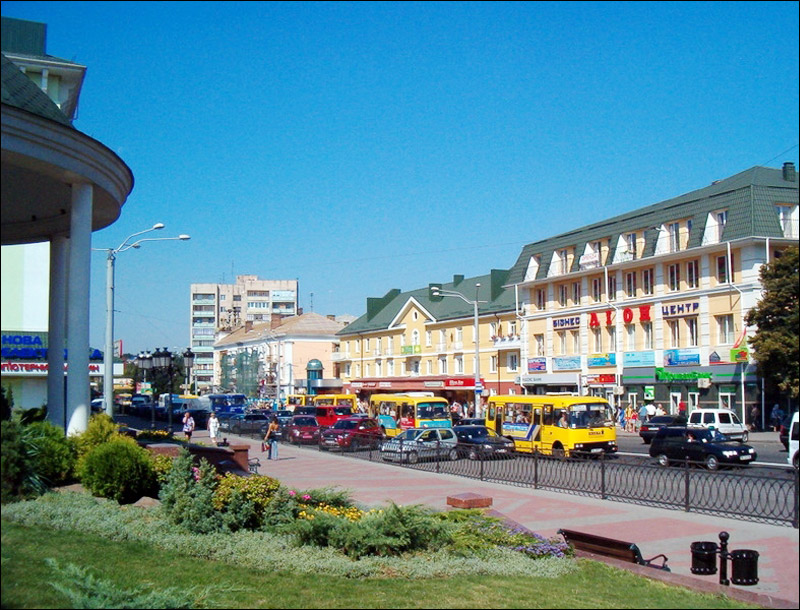
Ukraine is a country in Eastern Europe. It is rich in cultural wealth and natural resources. Rivne is a city in northwest of this beautiful country. It has the status of the regional center, but it still remains as a small quiet town with a sincere, friendly and open people. You can see a lot of them walking in a nice square in the center of a town. If you arrive in Rivne and have nothing to do just go to its center. There you will feel what you are ready to do. Everyone who gets there feel friendly atmosphere and ease in your heart.
At a first glance the rhythm of life there may seem slow but people live here an active life. They just know how to relax if they want to do that. Young people engaged in a variety of sports. The most common are speedway and football. Basketball, volleyball, rugby, baseball and hockey are also popular. World Women's Checkers Championship  was in Rinve in 2011.
There are a few museums in Rivne. The most interesting and newest is an Amber Museum. Amber is known for its healing features and is produced in Rivne region.
If you like cultural centers you can visit Drama, organ hall, cinemas and art galleries.


Other ways people spend leisure time here are ice skating, rollerblading, skiing and skateboards. A lot of people visit gyms. In summer you can ride a bicycle or have a picnic. There is a beach on a river Ustya. In the end of spring people begin to spend a lot of time there having picnics and getting a suntan. Going out of town for a picnic is also very popular. There are a lot of woods there. If you wish you can pick berries and mushrooms there.
There are a lot of cafes and restaurants in Rivne. So if you feel freezzy walking in Winter you can find some quiet place to drink coffee, hot tea or to eat some tasty Ukrainian or non-Ukrainian meals. If you like fast food there is McDonalds and a lot of cafes serving pizza. You can have a picnic in one of the squares if you wish.
If you wish to have fun you can visit one of the disco clubs or karaoke.
There is a brewery and a bakery in Rivne. So you can try a lot of tasty things from there.
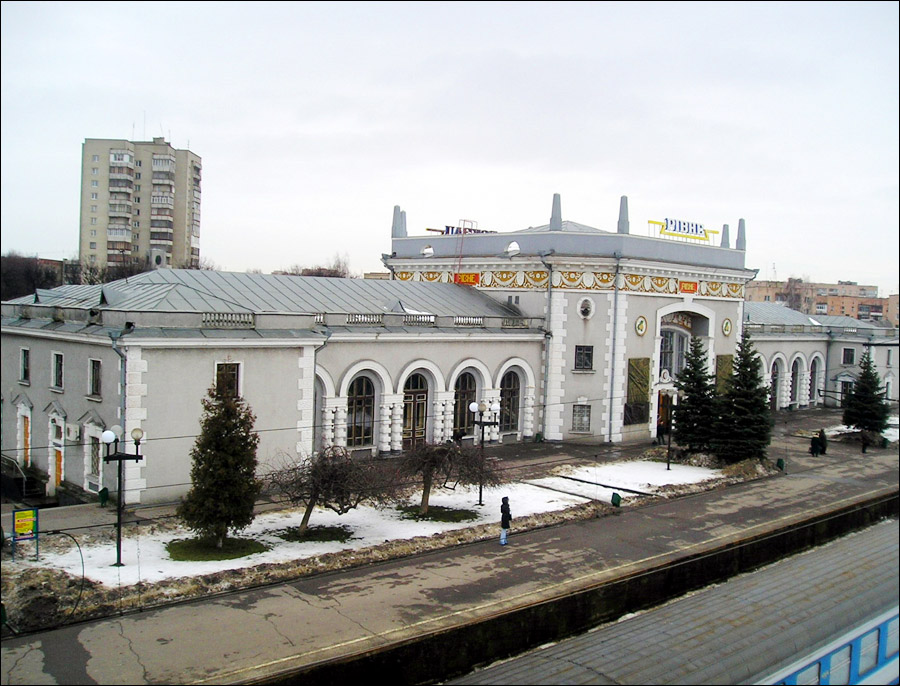
To get to their job people mostly use buses, trolleybuses and cars. But some sporty men use bicycles. It is easy to get to their work for people who live out of town because there are two bus stations and a train station in Rivne. To the closest places buses go every 15 minutes.
Religions of citizens mostly are Orthodox and Catholics. But there are nearly 26 of other confessions.
What to avoid there? Do not share how much money you have with the robbers. ))
Foreigners are frequent guests and always leave the city with lots of positive experiences.

europe

Friday, May 24, 2013

Almada, Portugal

Almada


Almada is a Portuguese city with around 175 000 inhabitants, being one of the most populated cities of Portugal. It has a big shore at west for the Atlantic Ocean and at North for the Tagus River, so it provides the city with a great potential for sun and sea tourism as well as country tourism. Almada rose as a city due to the industrialization from 19th century until the 70’s of the 20th century, its location near to the river allowed naval industries to supply jobs to families and give them good life conditions, although the city was very rural and behind the trends presented by the modern cities in Europe.

When Portugal adhered to the CEE, with the subsequent investment, the city of Almada also started to develop by developing the academic facilities like the Faculty of Sciences and Technology of Monte da Caparica and the Superior Institute of Egas Moniz where the academic spirit is well represented by young and dynamic people that give energy to the city with good programs to integrate all the population and the traditional academic events, like traditional festivals every week. One of the biggest struggles in Almada in the social inequality presented in the city that causes some assimetries, in terms of income and also safety, insecure areas are mainly in the perifery of the city.

The beaches of Costa da Caparica are the biggest touristic attraction of Almada, sun and beach in the summer with temperatures over 35ºC and with sports like surf, kitesurf, windsurf and bodyboard and good restaurants with fresh fish and acessible prices, and pubs and discos where anyone can have a good time and with acessible prices too, in average 10 to 20 €. If you prefer other types of tourism, there’s always the monument of Cristo Rei, where you can visit the top of it and you’ll have a great view of Tagus River and the entire city of Lisbon. If you want cultural activities, Almada provides the tourists with a great offer, with two big libraries, the City Forum Romeu Correia and the Jose Saramago City Library, both equipped with Audiovisual rooms, lobby, bar, newspaper rooms and a room which purpose is to held conferences, seminars, meeting or even areas to children. Almada has some recognized names at cultural level, like the former footballer Luis Figo, or the music bands like Xutos e Pontapés and Da Weasel or even Sara Tavares and Melech Mechaya

Almada is full of parks and nature, the environment has been a huge bet on the local government, so we can say that Almada is a green city. The kind of transportation used in Almada is mainly subway or bus. People often use the train, but to cross the bridge to go to Lisbon, which is the capital and where the majority of people get a job opportunity. Almada has a big problem with unemployment due to this proximity to the capital, so only small businesses are available in this city and one of the biggest shopping centers in Europe, the Almada Forum, where tourist can do some shopping and consuming fast food if they desire, but it would be a waste, since due to the proximity to the river and ocean, Almada has tradition in good local resturants. The inhabitants of Almada are very friendly and will welcome tourists in a good way.


Tuesday, May 28, 2013

Paris, France

Paris, France, Europe

By Murielle Lucie Clément

One of the most beautiful cities in the world, Paris is often called “The City of the lights”. It is very true; that with her many streets lights and lighted shops windows till the middle of the night, Paris looks
gorgeous. During the day, one can visit numerous places (Place de Ternes, place Saint Michel, Montmartre, Jardins du Luxembourg, Boulevard Saint Michel, Saint Germain) museum (among them Le louvre is surely worth a visit to admire La Joconde), walk alongside the Seine. At night, one can visit many theaters (Châtelet, Les Bouches du Nord, Bercy), go to the opera or see films in many cinemas. This is common to all big cities in the world. But Paris is not like the other cities in the world. Paris has the Eiffel tower and the Champs Elysées!


Situated in the seventh arrondissement of Paris, the Iron lady towers the Seine near Quai Branly, just in front of the Iena Bridge. This tower is 324 meters high (if we consider the antenna at the top) and was build in 1887. During 41 years, it was the higher building in the world. Many people and personalities were against the construction; but nowadays it became the most popular symbol to represent the Elysées capital. Since 24th of June 1964 it is part of the long list of France’s historical monuments. In 1991, UNESCO declared it, along other Paris’ monuments, part of the world’s patrimonies.

Close to it, a huge place with green and decorated with statues and sculptures, fountains and stairs made of marble: le Champ de Mars and opposite to it “La Place du Trocadéro”. Wonderful surroundings where youth and elderly people cohabitate on sunny days.

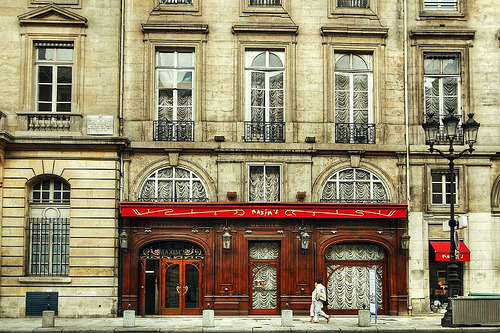
In Paris, of course, there are also lots of restaurant and smaller places to eat. A very celebrated place
is Maxim’s. The rendezvous of celebrities, French and foreign as well. Among the world famous hotels, one will go to Hôtel Lutetia, where during the war the Gestapo agents took quarter. After the war, people coming back from the camps were hosted in the beautiful chambers, waiting for their return to the villages where from they originated.

Like many other cities Paris has a long and interesting history. A visit to Paris is the assurance not to be bored. Gastronomic escapes, cultural occupation, slandering along streets from which history drips at every corner is awaiting to tell you many well kept secret and well known anecdotes.

You can join Paris, by air, by train, by car, even by boat sailing the Seine from Le Havre and passing
Rouen, another wonderful historical city.

Murielle Lucie Clément


europe

Saturday, May 25, 2013

Prague, Czech Republic

By Richard Barkand


If you take away the political borders, you might realize that Prague is located nearly in the center of Europe. It is part of the reason why many multinational companies have established offices in the Czech Republic’s capital city. It also helps to explain why so many travelers criss-crossing the continent make a point of adding Prague to their agenda.
But there is much more to the city than just a convenient stopping point. You know you are in an interesting place when you discover that the “New Town” district was first established in the year 1348.

Two of the most famous landmarks in the city are the Charles Bridge (construction began in 1357) and Prague Castle. But you do not have to limit yourself to only those two places. The neighborhoods on either end of Charles Bridge are full of narrow, crooked streets lined with restaurants, pubs, and craft shops. The weather is generally very pleasant from April to October, so you probably won’t mind losing track of time or your sense of direction.
Another must-see is the astronomical clock in Old Town Square. At the start of every hour, the clock performs a short, whimsical show. The square itself is full of beautiful buildings in different styles of architecture.


The public transportation system is modern, reliable, and inexpensive. An unlimited 24 hour pass costs 110 CZK (around $5.50 USD). Most locals buy a pass annually which costs around $240 USD.
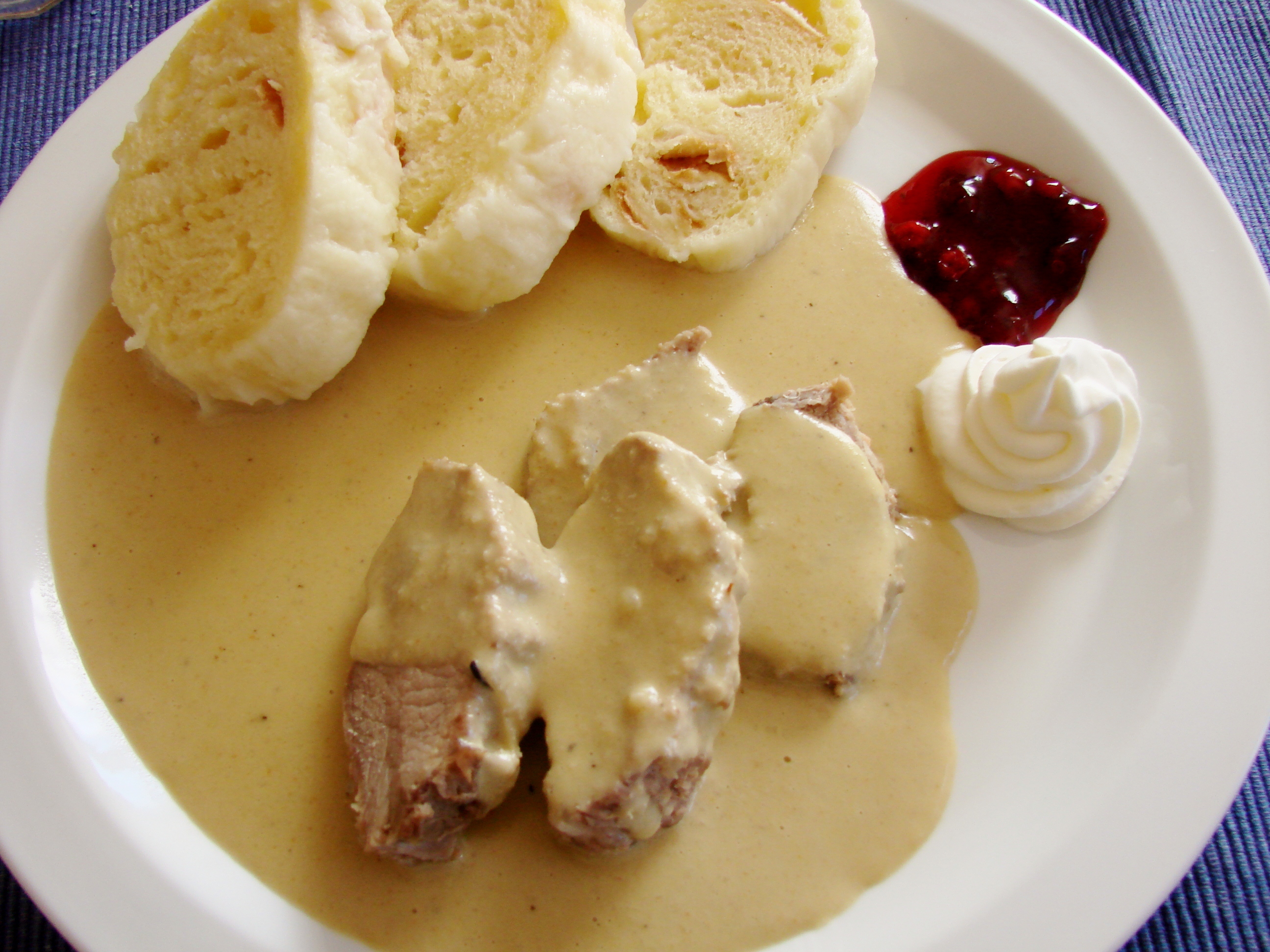
One thing that the city has not been known for is its cuisine. The traditional meat-centric dishes are readily available in nearly every neighborhood pub. One interesting and slightly unusual dish is called Svickova. It consists of marinated beef in a cream sauce with knedliky (dumplings) and, oddly, cranberries and whipped cream.


If you want something lighter, that’s ok. In the last five years, there has been a mushrooming of vegetarian restaurants and specialty shops offering fresh alternatives.
Speaking of mushrooms, for those who venture outside the city, mushroom picking is a favorite hobby of many Czechs. Go for a walk on one of the many well-marked hiking trails and you will certainly find people carrying baskets full of the various types of mushrooms growing in the forest. In fact, on summer weekends the city can feel a little empty. Many families have a chata (cottage) where they go to get a break from urban life.


Prague is also famous for its beer. And they do take their beer seriously here. The larger breweries employ inspectors who make visits to pubs and restaurants to check that their product is stored, poured, and served properly. Many microbreweries have sprung up recently to add more variety to the local beer culture.
After all, there is no better way to end a day of walking around the city’s stone and brick streets.
europe

Friday, May 24, 2013

Vilnius, Lithuania

Vilnius

by Aurelija Brazenaite


Vilnius is the biggest city and the capital of Lithuania. Vilnius is located in the Southeast of Lithuania and even two beautiful rivers flow through it. Vilnius is one of the greenest capitals in Europe. More than 40 % of territory is covered with green trees and plants. Vilnius has five Tourism Information Centers. Go there and get your free maps and the best advices.
There are many interesting and attractive sightseeings that must be seen and many activities that you should try. From the Gediminas Castle hill you can admire green and historical Vilnius panorama or an amazing sunset, which all colors in red. If you really enjoy watching town’s panorama, you also should go to the Hill of Three Crosses.

The Old Town with small streets is worthy for tourists attention as well. There are several museums like Museum of Genocide Victims and the Cathedral in the heart of Vilnius. Vilnius is very rich with many churches of different styles and epochs. The most famous is gothic Ona Church. Once you are in Lithuania, do not miss your chance to visit very cozy artists’ district called Uzupis.
Nature lovers will be amazed by beautiful and very green Verkiai and Pavilniai National Parks. Also, there are other beautiful parks such as Sereikiskiai and Vingio.
Couples, singles or families can rent bikes, canoes. Also, you can take long promenades in the most beautiful parks or have some extreme sports like climbing trees.

Vilnius is full of restaurants, cafes and night clubs. If you are searching for places where to eat or have
fun, you will find it without any efforts. You should be aware that only 18 years old or in some places only 21 years old can enter a night club. Do not forget that most of night clubs are opened on weekends.
Lithuanians are friendly, but at first sight it may look contrary, because not everybody likes to speak with strangers, especially in other language. Mostly older people do not know English, but they know Russian language very well. You should ask younger people for advices or other help.

Try to avoid visiting sleeping dorms, dark places and market zones, where you can be robbed and cheated. Also, if possible never allow yourself to be provoked by drunken clubbers. You should know that prostitution is illegal in Lithuania, so be very careful with some women.
Most of Lithuanians are Christians and they do not have any special customs. They celebrate all National and Christian holidays. It is very common to say hello by shaking hands between men. Women kiss each other into cheeks only if they are very good friends.


People living in Vilnius often go to eat in local restaurants or cafes. Most of restaurants bring outdoor furniture for warm seasons. You can sit outside and watch passers-by and admire the town. You should try a cold soup called Saltibarsciai. It is made of kefir, eggs, cucumber, beetroots and onions. It is the best dish for the hot day. Also, do not forget to eat Cepelinai, which main ingredients are potatoes and
minced meat.

Lithuania is very famous for its tasty beer. Try our local live dark or light beer.
If you are a fan of fast food, you can go to McDonald's or Hesburger. Mostly Lithuanians do not eat fast food very often. They prefer cooking at home.

Vilnius has very good public transport infrastructure. Students, young persons and retirees prefer going by bus or by trolley. Working people usually go to work by car. You should be aware that you can stick in traffic after working hours.
europe

Wednesday, May 29, 2013

Manchester, England

Manchester, England, Europe
By Simon Parry

Not just home to the greatest football team in the world, Manchester is also often revered as the UK’s
unofficial second city—but shh! Don’t tell Liverpool. It’s got everything: history, music, rain, an eclectic nightlife, rain, rich architecture, food, high street shopping—oh, did I mention rain?
Manchester certainly lives up to the nickname, ‘The Rainy City’, but if you can brave the drizzle and live to tell the tale, you’re sure to have a story worth telling. This is especially so if you decide to take a tour of the city’s landmark buildings.  Step back in time to the Victorian period with neogothic cathedrals, town halls, railways and pubs, or jump further back to the industrial revolution with old cotton mills, canals, and museums.

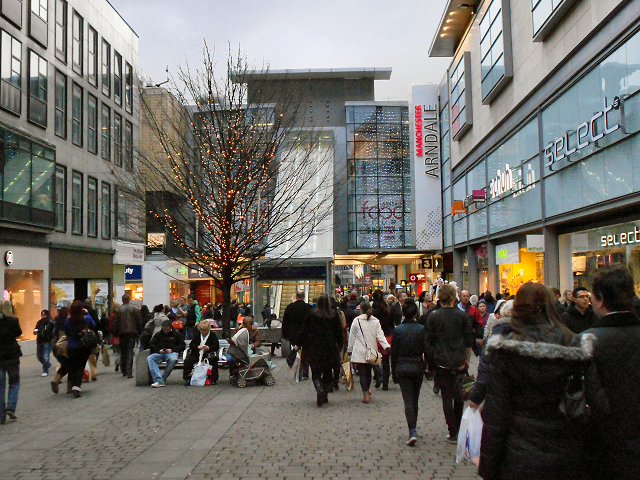
Once you've had your cultural fix of history, museums, and art galleries— of which there are many—it’s time for a spot of retail therapy.  From the high street shopping of the Arndale and Market Street, to the back street shopping of Afflecks and the Northern Quarter, Manchester really does cater for all. There are just as many vintage record shops, clothing boutiques, tattoo parlours, and independent comic book museums  as there are H&M’s and Topshop’s. And if you’ve a flare for the alternative side to fashion, look no further than Afflecks Palace, home to eclecticism.
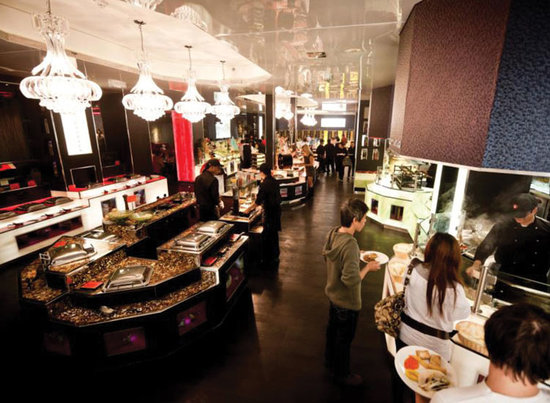
Shopping can, of course, work up an appetite, which is why Manchester pays homage to all the culinary styles of the world with over three hundred restaurants. Yes, you heard right— three hundred! That includes some of the most reputable restaurants in the UK, and the amazing Red Hot World Buffet.

There are also a collection of hidden gems scattered about, just waiting to be discovered in the backstreets of the Northern Quarter, including several superbly British tea houses.
They say on the sixth day God created MANchester.  Once the night comes alive, that could be true. When it’s time to party, no city in the UK does it better than Manchester. Dance music, pop music, R&B, metal—you name it, Manchester’s music scene has it. This great city has also been known to produce some of the world’s most influential music in recent times, from the likes of The Stone Roses, The Smiths, and Oasis, and who knows, you just might catch the next big thing in one of The Rainy City’s many clubs and bars.
So get the umbrella at the ready and take a trip into Manchester City Centre, where both the people and the places are larger than life and everybody is up for having a good time.

Europe

Saturday, May 25, 2013

Alba Iulia, Romania

Alba Iulia,  The Fortress of Transylvania

By Bogdan Alexandru Suciu 


             Alba Iulia is a city full of wonder , the heart of Romania, the fortress of Transylvania. This city , without doubts , had the biggest and the most important role in the history of  Romania . From Alba Iulia the nation began to flourish.
Alba Iulia is located in a tourist area and it is very attractive to travelers, who are  received and welcomed with great hospitality on this land. The tourist potential of the area finds its reflection in a broad constellation of evidence of  a past millennia, expressed in chain monuments of architecture and art, in a variety of natural beauties.
  Alba municipality was in ancient times a human civilization hearth where specific Romanian folk customs and traditions exert a special attraction for tourists from home and abroad.
If you are new on this land  , there are a variety of  possibilities to develop. So here are some great attractions for the passionate tourists. One of the most interesting things to see is the exchange of guard ceremony that takes place on Saturdays and on Sundays at the Third Gate. The entire ceremony takes place as it used to be in the medieval period, when Alba Iulia was probably the most impressive fortress from the Eastern part of Europe.


During this ceremony , the riders with their horses  and the soldiers use to march and surround  the fortress to the delight of the public that come in large numbers.

Alba Iulia is full of other attractions for example The Orthodox Cathedral, known as Coronation Cathedral, is the artistic expression of our national unity achieved by the Act of 1918. The building has a shape like a Greek cross. The entrance to the church is through an open porch with large arches, supported on four columns with capitals.
Another very important historical monument located near the Orthodox Cathedral is The Roman Catholic Cathedral built in the thirteenth century. It is the most valuable monument of early Transylvanian medieval architecture, harmoniously combining the elements of the Gothic and Roman architecture.


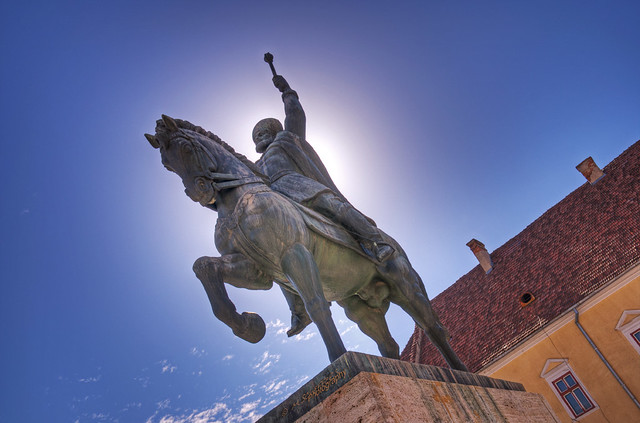
Near the Roman Catholic Cathedral we can find the statue of Michael the Brave, one of the greatest rulers of Romania.  There are many other monuments , historical buildings , National Museums where you can find valuable objects from ancient times that have more than 2000 years of existence , the union Hall, the Old part of town and a very big fortress surrounded by channels , caves and caverns and if I will mention them all probably I will not finish today with the enumeration. Another thing that I would like to say and emphasize is that only the entire fortress has more than 10 tourist routes and during these routes you can ride horses and drive using the  medieval carriage.
In the end I would like to mention one more monument. Having a great importance for the Romanian culture the Library Bathyaneum is a major  historical objective for Alba Iulia. It is known worldwide for its collections of great value representing manuscripts and rare prints
So what are you waiting for? Do not waste your time ! Come and visit Alba Iulia, The Heart of Romania !
europe

Wednesday, June 5, 2013

The Hague, Netherlands

Den Haag (The Hague) - The Netherlands

By Federica Cagliani


Just 30 minutes by train from Amsterdam, you can find The Hague, city founded during the XIII century, as headquarters of diplomats and of the royal family. Currently, the center is represented by the modern Spuikwartier, where it is visible the Municipal office, designed by the famous architect Richard Meyer.

ATTRACTIONS:
Binnenhof- In the XIII it was the shooting ground of the royal family. Now this old building comprises the Parliament and the offices of the Dutch government. Excellent place to think about Dutch history.
Vredespaleis (Peace Palace)- In 1899 The Hague hosted the first international meeting for peace. The nations interested in this event helped the city to decorate the palace, build with a Gothic style. Starting from 1946, the Vredespaleis hosts the International Court of Justice, main judicial body of the United Nations. Now it is possible to view the main building and park around.
Mauritshuis-  One of the most prestigious museums in the Netherlands, full of magnificent canvas by Vermeer, Rembrandt and Dutch painters. It is closed till 2015, due to a renovation, but some of its works of art are visible in another museum in the Hague, the Geementemuseum.
Scheveningen- 15 minutes by tram or by bike from the center of the city, there is this beautiful seaside resort. Do not miss the Kurhaus, luxury hotel, but watering place since 1885. Nice the promenade along the sea to appreciate the sand dunes and in the distance the cargo ships ready to dock at the Rotterdam harbor.

De Haagsche Markt (The Hague market) - It is the biggest market of Europe, with more than 500 stands. One can buy food, clothes, electronic devices, soaps and perfumes, together with Dutch, Turkish, Surinamese and Moroccan typical food. Excellent place to understand the ethnical culture of the city. It is open on Mondays, Wednesdays, Fridays and Saturdays from 9 to 17 and easily accessible by tram.

TRANSPORTATION
The Hague has an excellent system of trams and buses that permits to reach every corner of

Friday, June 7, 2013

Vienna, Austria

VIENNA, AUSTRIA, Europe,    -Bunt Riveresque allure

Picture By: http://upload.wikimedia.org/wikipedia/commons/thumb/6/6b/Opera-Vienna-Austria-2005.jpg/1200px-Opera-Vienna-Austria-2005.jpg

By  Vladan Sutanovac

Idyllic, courtly and proud lies the city of Dunaj. The name given by the Slovene - meaning Danube river, doubtlessly, best of all, captures the city's cross-cultural charm and allure. For, just as the river itself flows through every day, each day, so does the river of people in one never-ending continuum. And once you allow yourself to be taken over by it, in one fell swoop, it can quite easily turn out to be one of the visits of your life.. without any false pretense.

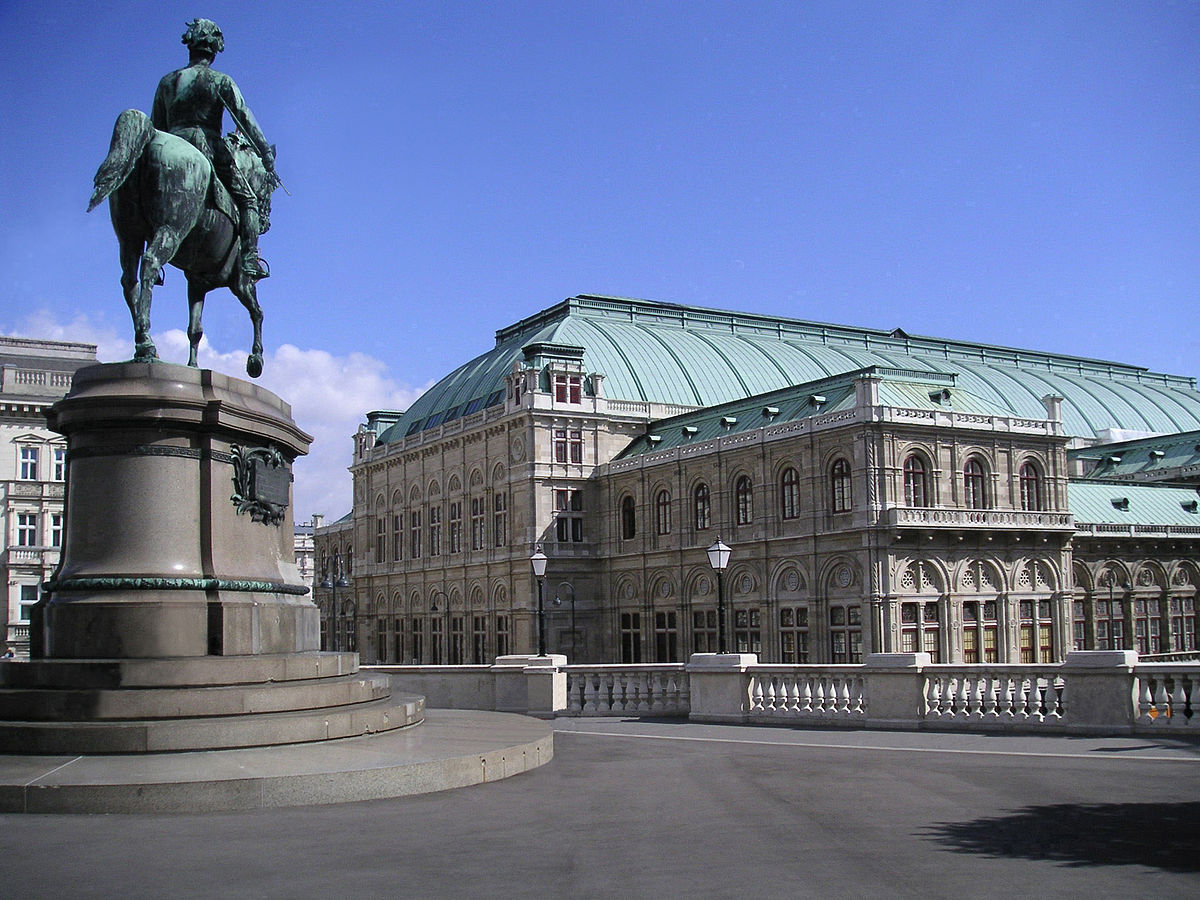
Sure you can decide for the idyllic and courtly, and sure you can dedicate all the time on your hands to visiting the gems of the days gone by - the Imperial Palace of the Gorgeous Fountains (Schönbrunn), the Belvedere Palace, the gems of the Ringstraße - gothic and the macabre St. Stephen's Cathedral(Stephansdom), St. Charles's Church (Karlskirche), the State Opera (Staatsoper), the Hofburg Royal Palace, the Museum of Fine Arts (Kunsthistorisches Museum) and its counterpart Museum of Natural History (Naturhistorisches Museum), the Parliament (old and new), the Town Hall (Rathaus), the Royal Theater (Burgtheater) and surely round and round you will go until you are back to where you started from.  For that is how it all goes in the Round St. (Ringstraße). But just as one can pay these marvels of the past a concise tribute in a single breath (sentence), one can also pay them an up-close-and-personal tribute in a matter of a day, by simply following the "round brick road".

However, if you seek, for a little while at least, to truly breathe as Vienna, live as Vienna and.. Be Vienna, then you ought to consider taking a slightly different road.

Now, before we go on any further, important to bear in mind is that, regardless of the time of the year, the weather in Vienna...well...has a life of its own. Why it is always useful to have at least a raincoat or an umbrella on you, just in case. But, do not be alarmed because, in this sense, Vienna is

Saturday, June 8, 2013

Turku, Finland

Turku, Finland

By Lena Diab-Roukala

A city of History, Culture and Charm
Whether you are looking for a relaxing holiday where you can walk around, do some shopping and enjoy the tasty food, or if you are more of adventurous type, looking to exploring the fascinating Finnish nature and its charming archipelago, then you are in the right place. Turku will offer you all of this and much more.

Turku, once the capital of Finland and the oldest Finnish city ever, dating back to the late 13th century, stands proudly on the southwest coast of Finland at the mouth of the Aura River, in the region of Finland Proper.

The cozy feeling that this city brings to you, distinguishes it from all the other Finnish cities. Though being one of the biggest Finnish cities, the way this city is built, covering the area of land over both sides of the River Aura, while the city centre is located close to the river mouth from both sides, makes it feel small and warm.

Designated as the European Capital of Culture for 2011, along with Tallinn, Turku has a lot of attractions to offer, both old and new. The cultural venues in Turku include several theatres, cinemas, art galleries, and a city philharmonic orchestra. There are also numerous museums, such as the Turku Art Museum, the Wäinö Aaltonen Museum of Art, the Sibelius museum, which is the only museum in Finland specializing in the field of music, and historical museums such as

Saturday, May 25, 2013

London, England

London, England

By Nadia Farah Mokdad


‘When a man is tired of London, he is tired of life; for there is in London all that life can afford,’ said English writer Samuel Johnson, and it is just as true now as it was then. Inviting someone to London means inviting them to join a fast-spinning carousel of history, culture, nightlife and exciting people.


The capital of England is a city where everyone can find something to suit their tastes, from food to entertainment. It is easily accessible and has a well-developed public transport system, which, as a visitor, is preferable to going by car. Taking some of the many central bus routes (88, 29) is a wonderful way of experiencing not only the heart of London but also a ride on the famous double-decker bus. It is as fun as some movies show it be. However, if you prefer a more organised approach, there are companies like The Original London Sightseeing Tour which offer open-top bus tours stopping at most famous attractions.


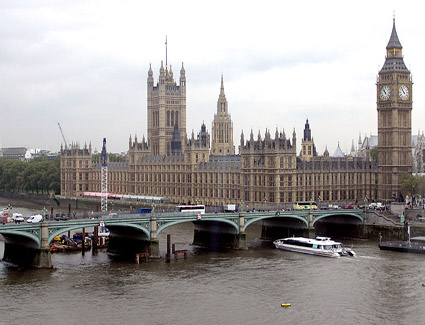
To best way to know the city, though, is to walk it. A good place to start is at London Eye, the renowned Ferris wheel which offers a magnificent, almost plane-like view of London. The ride experience is especially beautiful the closer it gets to evening time because the London lights are being switched on. From there on, you can cross Westminster Bridge to encounter the equally well-known House of Parliament with its sharp towers that shine golden on sunny days. If you get there at a sharp time, you can listen to the haunting chime of Big Ben. Westminster Abbey is only a couple of minutes’ walk away. It is a gorgeous Gothic building and home of the Poets’ Corner where many famous English poets are buried, for example, Poet Laureate Lord Alfred Tennyson.


From now on the city is a playground whose exploration gets dictated by personal taste. There are many things to fill the days, starting with seeing the royal jewels or walking around the execution site of Anne Boleyn at The Tower of London to having a stroll through Hyde Park or Kew Gardens. The possibilities seem endless, from museums and art galleries, west-end theatres and having afternoon tea at one of London’s tea rooms to enjoying a local band at The Blues Kitchen or dancing the night away in a club.

What is guaranteed for everyone, though, are interweaving streets lined by gorgeous historical buildings with an architecture spanning a wide variety of styles and periods. Many of these buildings host, on the ground floor, cafés and traditional English pubs. You can take a relaxing break from sightseeing and sample some traditional English cooking, like fish and chips or a Sunday roast (it usually consists roast beef served with roast potatoes, assorted vegetables and Yorkshire pudding), accompanied by a pint of ale or cider. For those that don’t enjoy the local cuisine, international alternatives are easily available, with Chinatown, in the Soho area, offering a variety of oriental restaurants, bakeries, etc.


Shopping enthusiasts will find themselves at home in the Oxford Circus area, clashing bags with other shoppers on Oxford Street and Reagent Street. A wide selection of shops is available from high-street brands to luxury ones. For visitors with more alternative tastes, Camden Town is a great place to be, not only for shopping at The Stables Market, where many handmade things are sold, but also for the eclectic mixture of quirky places and people.
That can also be said of London in its entirety because, no matter what you end up doing, you will leave having had a plentiful experience and probably an eager wish to return.
europe

Thursday, June 13, 2013

Oxford, United Kingdom


Oxford, United Kingdom
-A city of ‘dreaming towers”-

By Alex Munn

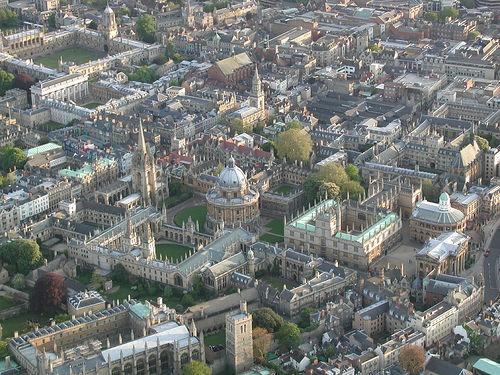
Oxford is situated in the county town of Oxfordshire in central southern England. Its population reaches 165.000. The city of “dreaming towers” is amazingly beautiful, historically attractive, always vivid and ready to host visitors from all over the world at any time of the year. Oxford is the best place to be acquainted with the English traditions and culture. The mix of medieval and modern traditions creates unforgettable atmosphere that is pleasant to enjoy not only when having a rest, but when working as well. A visit to Oxford is always unique and this is why it is not surprising that the learning of English in Oxford is considered the best all throughout the world. This beautiful city also outstands due to the colleges located on the banks of the rivers, in the center of the greatest museums and galleries.

Transport
The historic centre is comfortable for strolling due to the picturesque streets and places to stroll. The biggest part of the city is a pedestrian zone and all the sights are easy to admire. The only thing one should be careful with in the centre is the inconsiderate cyclists who miss the pedestrian crossings and cut the corners feeling like Schumachers. However, to drive a car in Oxford is not recommended, as the pedestrian zones are many, complex driving directions, e few parking zones, which moreover are paid. A fee in the buses vary according to the distance and if you are going to make more than 2 trip a day, it would be better and cheaper to get a season ticket.

Bike Rental
You can join the cyclists and enjoy your day, as it is something so usual for an Englishman. There are many railway stations for one to rent a bicycle, and in some places, it may not even require any fees. At first, it may seem that it is quite dangerous to ride a bicycle on the same road with the cars, but no. All the car drivers have already used to the cyclists. Important that if you

Saturday, May 25, 2013

Piatra Neamt, Romania

Piatra Neamt, Romania

By Iulia Ceausu
Picture By: http://upload.wikimedia.org/wikipedia/commons/thumb/2/2d/Tower1499.jpg/300px-Tower1499.jpg


Piatra Neamt is surrounded like a halo by mountains and forests. Situated in north-eastern Romania, is one of the oldest cities in Moldova with an age of 2000 years (it’s a former Dacian settlement). For his beauty and architectural relief, Piatra Neamt gained the name: Pearl of Moldavia.
Over the past few years, Piatra Neamt has become a city with attitude. You’ll get in touch with the history of this town from the minute you get out of on the station platform. Francis Ford Coppola turned this train station into a setting for one of his films. We have small streets, but not crowded, with cozy coffee shops, bars and antique shops you will feel like home.
A walk at the Princely Court it will take you in the past. Located on a small plateau in the center of the city here you will see the ruins of the old Princely Court ( from 1468), the Bell tour and the Church of St Joan.
The "telegondola" (cable car) from Piatra Neamt will give you the best sightseeing spot you can get to. That is until it takes you up the mountain and you get to see the whole valley and all the way to the Ceahlau Mountain. Tickets are cheap, and when you get on top there is also a nice rustic restaurant with good traditional food and friendly staff. And there is also a gift shop. If you are visiting in the winter, well you should also try the ski slope. You can rent there all the equipment you need.
If you are going in the summer you should visit the recreational complex Strand. You have big pools (for children and adults), lounge chairs, even a VIP zone for more comfort. Here you can also play tennis, football, basketball.
Not far from this Complex is the Equestrian Complex. The equestrian base from Piatra Neamt is considered to be the most beautiful one in the country because of the scenery and how it’s built and maintained. The complex is situated in a place surrounded by beautiful hills with green forests, the equestrian base is a great place for tourists and for those who want to practice the sport of ridding. During the summer you can go on mountain ridding with horses specially trained for this kind of routes. Especially for kids they have a pony, so it doesn’t matter if you are big or small you and your family could have a great time here. As a tourist I recommend that you walk. The town is very small, so everything is close.
Come to Piatra Neamt to see old and new combine together. Taste the romanian traditional food and enjoy our town!
europe

Tuesday, June 4, 2013

Belgrade, Serbia

Explore Belgrade, Serbia, Europe

by Nikolina Andric

Belgrade is the capital of Serbia, at the confluence of the Sava and Danube Rivers. With its population of over 1.5 million people, it is the most populated and the most bustling city in the country. Thanks to its architecture, it got the present name which means “White City”. Belgrade is also known as a crossroad between the East and the West. This city has a long and turbulent history, therefore you will surely find something interesting for you.

Where to start your visit? An average Belgrade citizen will certainly suggest visiting the Belgrade Fortress, “Kalemegdan”. This impressive structure is from the Turkish period. If you are wondering how much the visit costs, I will surprise you by telling “It`s a free”. Yes, it is free, but you better consider wearing nice comfortable shoes, because it is huge. In addition to the magnificent view of the city and the Danube and Sava rivers, you should visit the Military museum.

When you are arriving in Belgrade, crossing the “Gazela” bridge, you will catch a glance of the highest Vracar hill with breathtaking illuminated Saint Sava Temple. If you have the time you should visit it, because it is fabulous. Feel the religious spirit at the holiest place in the city. St. Sava was the first Serbian archbishop and protector of schooling; therefore he is one of the most respectful Saints in Serbia. The Template itself is recently constructed, exactly on the place where the St. Sava`s relics were burned during the Turkish rule, at the end of 16. century.


If you consider visiting Belgrade during the summer, you should visit the most popular swimming area Ada Ciganlija, popularly known as “The Belgrade`s Sea”. In meter of the fact, Ada Ciganlija is a river island on the artificial Lake of Sava, just 15 minutes from the town Centre. However, if you do not like crowd, you should avoid weekends. Nevertheless, a lot of opportunities for different type of sports are waiting for you: swimming, biking, running, skating, kayaking, windsurfing and so much more. Bathing area is opened from 10 a.m. to 7 p.m. and you can always enjoy some refreshing drink or cup of coffee.
What you shouldn`t miss is the main town`s street “Knez Mihajlova”. This oasis for walking and shopping also has significant number of historical buildings, galleries, cozy restaurants with friendly stuff, McDonalds` and numerous stores and boutiques with fashionable clothes.

If you are travelling with kids, one of the “must see” attractions is the Belgrade Zoo, the biggest in the country. Thanks to love and tenderness of the founders, the most of the Zoo`s are rare and extinct and considered to be the best of best. For example, American Alligator is the oldest live alligator in the World; German shepherd, the savior has a statue in the Zoo for self-sacrificing and defending their loving breeders.


In the evening you can enjoy your dinner at the most famous, 500 years old street “Skadarlija”, that is also known as a “Bohemian quarter”. The name itself is enough to assure you a great fun, but let be precisely. Can you imagine the crowd of people who are dancing on the streets, musicians who enjoy their music, artists who are trying to catch all dancer`s moves and events around them? Here you can choose one of the many restaurants and taste delicious traditional Serbian cuisine, such as “sarma”, which is made of the cabbage and pork, usually served with sour cream or horseradish.
Not enough? Want to deplete your energy a bit more? Why wouldn`t you feel trilling atmosphere at one of the rafts along the rivers; make new friendships? Belgrade`s citizens are sociable, open-minded and so friendly that you will never forget them. Good time is guaranteed until late at night…
So, come, try, and enjoy.
You will be back soon… I am sure!