Showing posts with label cuisine. Show all posts

Monday, June 3, 2013

Wellington, New Zealand,

Wellington, New Zealand, Oceania

By Ryan Morris-Reade

Wellington is a vibrant, cosmopolitan city, surrounded by rugged coastline and the towering Rimutaka
mountain Range, locally known as the Rimutakas. It is New Zealand’s capital city (also the southern most capital of the world), and it’s New Zealand’s second largest city, although with a combined urban population of roughly 395,000, it isn’t actually very large at all.

The best time to visit is in Spring, Summer and the beginning of Autumn, which run from early December to late March. Visiting in Winter isn’t recommended as the weather can be cold and miserable for long stretches, with torrential rain and driving winds. While the city is famously known for its strong winds, and it can get very windy at times, it generally isn’t so bad in most areas. The winds are at their worst in the CBD, where in the 1970s many of the tall buildings were built with little regard for designing wind breaks into the structures, resulting in tall smooth buildings that allow the wind to flow down unhindered, causing mighty gusts that tear away umbrellas and sometimes sweep elderly people and children alike off their feet.

Wellington City is the cultural and creative hub of the Wellington region, with loads of art gallery’s, trendy cafés and comfortable bars. One of the best places to start exploring is Cuba Mall, the pedestrian street in the centre of the city, just south of the CBD. Cuba Mall runs for a few blocks and is littered with restaurants, bars, cafés, gallery’s, buskers and street preformers, op-shops and fashion boutiques. A good place to come and have breakfast in the morning and watch the interesting and colourful variety of people flowing past. Many of the cafés make excellent coffee and offer New Zealand’s unique cuisine, a mixture of styles from around the world.

One of the great things about Wellington’s small size is the ability to get around easily. If you don’t mind walking, you can reach many places on foot, and the public transport is fairly decent, with buses running all over the city (a lot of them electric), and a few trains to

Tuesday, May 28, 2013

Cape Town, South Africa

A jewel at the southern end of Africa

By Anton Venter


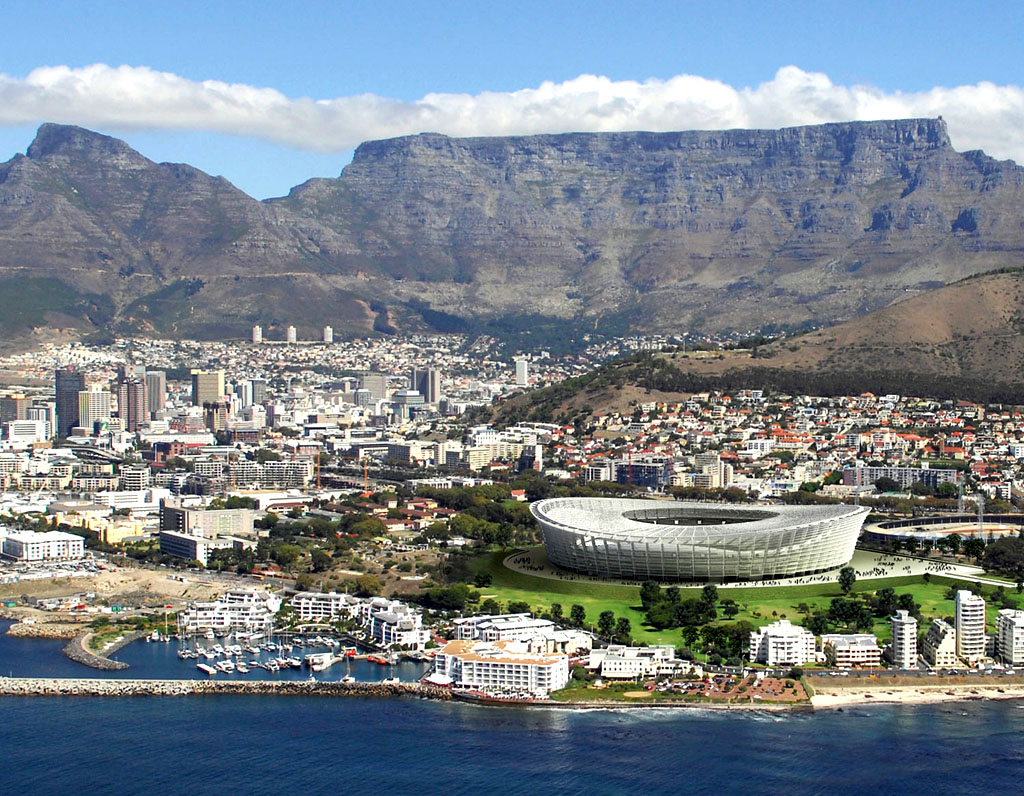
Cape Town is the capital of the Western Cape province of South Africa. The city is the country's most popular tourist spot with pristine white beaches arranged around a peninsula. Restaurants offer international cuisine with local flavours added to the mix. Accommodation is available that suits every budget from backpacker to jet-setter.
Cape Town is the southern point of South Africa where the first settlers landed in 1652 to start the long journey of the country's development. The city is not the actual dividing point between Atlantic and Indian Oceans. That honour goes to Cape Agulhas, further south from Cape Town. There are a number of museums that depict Cape Town’s unique history. Many buildings have been preserved over time and those who appreciate historical architecture will not be disappointed.
The 2010 World Cup Soccer resulted in an upgrade of sport stadiums that included Cape Town. The event united the cultures of Cape Town. It showed that black, coloured, white or any colour in between can forget about their differences and make the city a place where tourists feel welcome and safe.
Wine lovers who visit Cape Town are in for a treat. The wine regions around the city are all within five to thirty minutes’ drive from the city. These regions include Durbanville (within Cape Town area) and regions outside the city, e.g. Stellenbosch, Paarl and Somerset West. All these wine farms offer tastings and many of them have also opened some of their vineyards to mountain biking with trails that vary from easy to strenuous.
The long list of restaurants represents cuisine from almost every country in the world. Some restaurants specialize in local cuisine (African, Cape Malay and Afrikaans) and their ambience is often enhanced by music and even dancing.
African menus typically include red meat, game, chicken and “pap” (porridge) with gravy. These restaurants can be found in well-heeled tourist spots as well as townships. Barbequing is a favourite pastime on weekends, combined with beer drinking and watching sport like rugby. You’d be hard pressed to find anything but red meat and sausage on those barbeque grids. An alternative to the grid is a “Potjie”, where a pot is hung over coals to slow-cook a stew of meat and vegetables. Other popular Afrikaans and Cape Malay foods include Bobotie (a kind of meatloaf) and Chakalaka (a garnish of Indian origin). Some of the desert favourites are Koesisters (twisted pastries) and Milktart.
Seafood features well on Cape Town’s menus. A variety of shellfish and line fish is available at most restaurants. Traditional local ways of processing fish are “Bokkoms” (dried and salted fish) and smoked “snoek” (a local fish snubbed by some due to its many bones but very tasty when smoked).
Open-top busses will take you to most tourist spots on the peninsula. Specialised tours are available to the "townships" where low-income housing can be seen with small businesses thriving on the streets. No visit to Cape Town will be complete without a trip up the cable car to the top of Table Mountain, the iconic feature of the city. From here you have views that compare with those of the world's most spectacular cities. The Victoria and Alfred waterfront has departure points for a selection of boat trips around the main harbour and out to beaches such as Clifton. Another favourite destination for a boat trip is Robben Island. There you will find a museum that commemorates the years when there was a fully functioning prison on the island with Nelson Mandela its most famous inmate.
In addition to the standard bus service, the city is phasing in a brand new rapid transport system with dedicated lanes for buses. It has not reached all suburbs yet, but already includes a route from the airport into the city centre. Metrorail trains run only on major routes around the city, but outlying stations include Stellenbosch, Paarl and Somerset West.
Minibus taxis provide a cheaper alternative to regular sedan taxis, but their courageous drivers may not be for the faint-hearted. Some locals are uncomfortable with minibus taxis, but they’re safe as long as they are used within regular hours. Minibus commuters have adopted a unique sign language for hailing a taxi. Using only one hand they communicate with the “gaatchie” (conductor) of an approaching taxi about its route and destination to ensure it’s the one for them.
Cape Town has some interesting outings for nature lovers. Two of these are within twenty minutes’ drive from the city centre. The World of Birds is situated in Houtbay, a vibrant fishing village on the western side of the peninsula. You can stroll through the largest bird enclosure in Africa, carefully watched by owls. Butterfly World is near Klapmuts, north-east of the city. Here you can mingle with free-flying butterflies within safe distance from scorpions and spiders.
Within thirty minutes from the city on the southern side of the peninsula, by car or a scenic train route right next to the ocean, there are the quant fishing villages of Kalk Bay and Fish Hoek. There is a good variety of restaurants in Kalk Bay, the most popular being the Brass Bell, which over the years has developed into a hot spot for younger people where you can choose from six dining areas that range from formal to informal. Those interested in antiques and books should reserve at least half a day to browse the shops in Kalk Bay.
General information
All banks are open Monday to Friday 8h30 to 15h30 and Saturday mornings. Some banks are open on Sunday mornings. ATMs are in abundance. Temperatures vary between 13° and 28°C through winter (May to August) and summer (September to April). Tap water is safe to drink. English is spoken everywhere while some locals speak Afrikaans, the language that has its roots in Dutch.
As far as security is concerned, the same international travel rules apply in Cape Town. Don’t have valuables on display and don’t venture into suspect areas late at night.


Monday, May 27, 2013

Singapore, Republic of Singapore

Singapore, Pearl of Asia

By Siny Sebastian


Enter the realm of the Lion city and you are sure to be enthralled by the beautiful sights that this wonderful and vibrant country is proud to show the world. The enchanted metropolitan island city with its diversified cultures, cuisines and vivacious night life has been able to charm and allure multitudes of modern globetrotter to its shore.
One of the most remarkable features of this island country is that it has been able to constitute 50 % of its area with greenery along with modern sky touching scrapers and subways. In spite of being one of the most densely populated countries, it still has 50 major parks and 4 national reserves within the small area and for this reason it is called the Garden City.
A look back into the history tells how the country got its name from the Malay word “Singapura”. According to the legend, Sang Nila Utama, a Srivijayan prince, landed on the island and, catching sight of a strange creature that he thought was a lion, decided to found a new city and thus “Singapura” or the “Lion City” was born.
Tourism is a major industry in Singapore and therefore we readily accept and seize any new and future oriented trends in leisure and entertainments. As a result of which, tourists consider Singapore as a place which is always full of fresh and new surprises and as a place worthy of repeat visits.
The diversity that the country offers in terms of religion, language, cultures are unparalleled when compared to its size. Tourists are able to communicate easily with the local people since English is one of the main languages along with Chinese, Malay and Tamil. Due to multiculturalism, there is no single set of culturally acceptable behavior.  People are of friendly nature and it is not uncommon to see shopkeepers and customers of multiple races engaging in animated conversations.

Singaporean food cuisine is touted as the potpourri of all cuisines. Food in particular is a steal, since
there is an extensive array of mouth - watering cuisines to satisfy every palate. The legendary hawker centers and coffee houses are open 24/7 and furthermore it is possible to relish these excellent hawker foods for under $5 for a generous serving. It is a paradise for the food lovers since they can try the local favorites like Laksa, roti prata or Chilli Crab or indulge in the international cuisines like Mexican, South East Asian, American, European and Middle Eastern cuisine in this clean city.  International fast food joints such as McDonald’s, KFC can also be seen in most of the shopping malls and is very much visible throughout the region.
Due to the excellent public transport system, it’s very much easy to move around the region. Most of the citizens travel by using bus, train and taxis. Train mode consists of both MRT and LRT. Taxis are also

Saturday, May 25, 2013

Prague, Czech Republic

By Richard Barkand


If you take away the political borders, you might realize that Prague is located nearly in the center of Europe. It is part of the reason why many multinational companies have established offices in the Czech Republic’s capital city. It also helps to explain why so many travelers criss-crossing the continent make a point of adding Prague to their agenda.
But there is much more to the city than just a convenient stopping point. You know you are in an interesting place when you discover that the “New Town” district was first established in the year 1348.

Two of the most famous landmarks in the city are the Charles Bridge (construction began in 1357) and Prague Castle. But you do not have to limit yourself to only those two places. The neighborhoods on either end of Charles Bridge are full of narrow, crooked streets lined with restaurants, pubs, and craft shops. The weather is generally very pleasant from April to October, so you probably won’t mind losing track of time or your sense of direction.
Another must-see is the astronomical clock in Old Town Square. At the start of every hour, the clock performs a short, whimsical show. The square itself is full of beautiful buildings in different styles of architecture.


The public transportation system is modern, reliable, and inexpensive. An unlimited 24 hour pass costs 110 CZK (around $5.50 USD). Most locals buy a pass annually which costs around $240 USD.
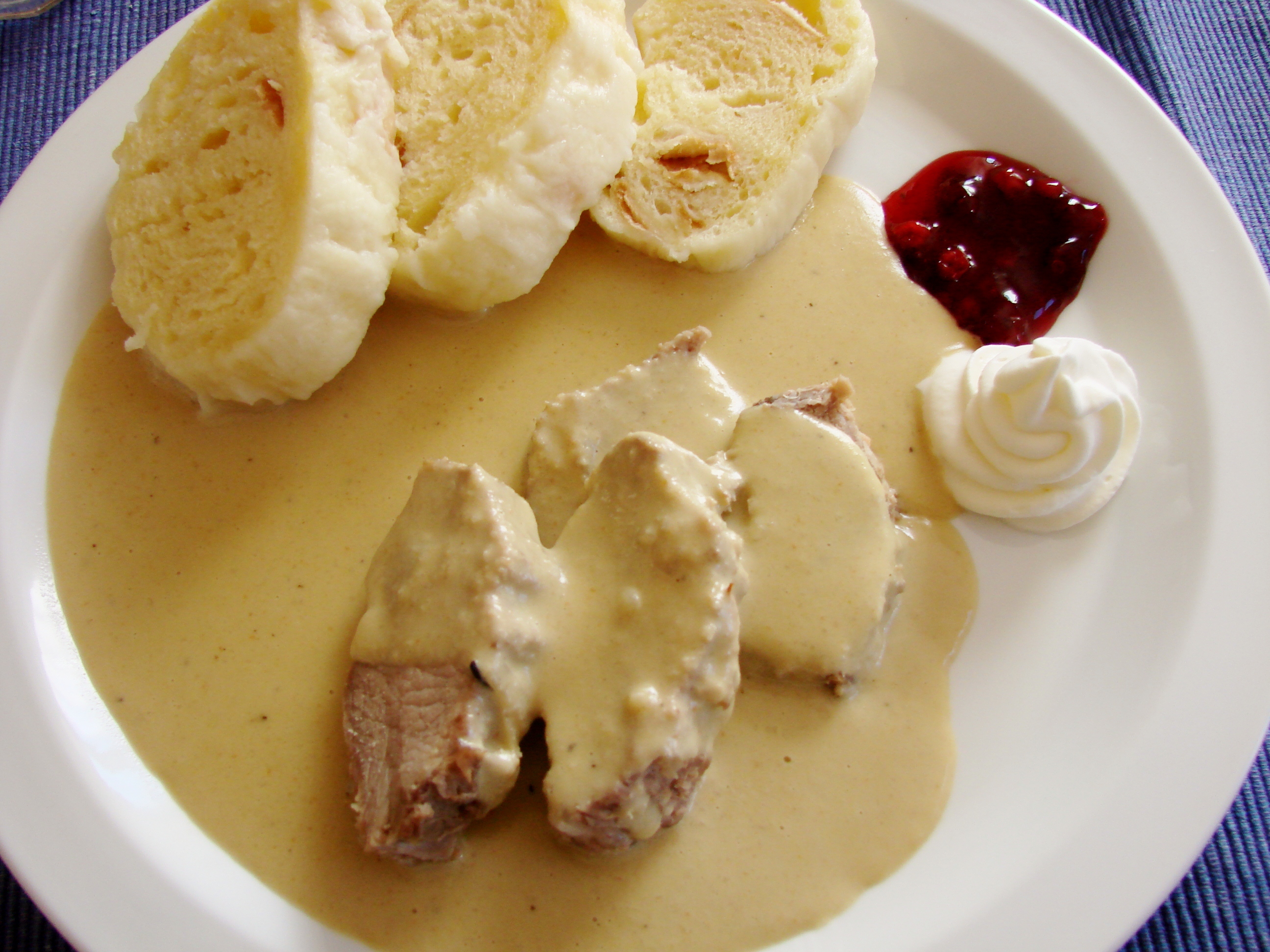
One thing that the city has not been known for is its cuisine. The traditional meat-centric dishes are readily available in nearly every neighborhood pub. One interesting and slightly unusual dish is called Svickova. It consists of marinated beef in a cream sauce with knedliky (dumplings) and, oddly, cranberries and whipped cream.


If you want something lighter, that’s ok. In the last five years, there has been a mushrooming of vegetarian restaurants and specialty shops offering fresh alternatives.
Speaking of mushrooms, for those who venture outside the city, mushroom picking is a favorite hobby of many Czechs. Go for a walk on one of the many well-marked hiking trails and you will certainly find people carrying baskets full of the various types of mushrooms growing in the forest. In fact, on summer weekends the city can feel a little empty. Many families have a chata (cottage) where they go to get a break from urban life.


Prague is also famous for its beer. And they do take their beer seriously here. The larger breweries employ inspectors who make visits to pubs and restaurants to check that their product is stored, poured, and served properly. Many microbreweries have sprung up recently to add more variety to the local beer culture.
After all, there is no better way to end a day of walking around the city’s stone and brick streets.
europe