Showing posts with label restaurants. Show all posts

Friday, May 31, 2013

Jakarta, Indonesia

Jakarta, Indonesia,  Southeast Asia

By. Tyara P Hansel

The City
As a capital city of Indonesia, Jakarta sure has a lot of interesting to offer. Whether you’re an
adventurous traveler, party traveler or just looking for a new destination or your next family holiday, you will always find anything you want in the city. Jakarta is divided into five areas; Central Jakarta, West Jakarta, South Jakarta, East Jakarta and North Jakarta. Each area has its own uniqueness. Central Jakarta is popular for its business district, but it has also abundant of historical sites and museums. South Jakarta is possibly the hippest area of the city with numerous shopping centers (Pondok Indah Mall, Plaza Senayan, Senayan City, Lippo Mall Kemang and Lippo Mall Kemang –just to name a few), restaurants, bars and interesting hang out spots.

If you love some outdoor or aquatic activities, North Jakarta is the best place. From Ancol, you can take a boat ride to some beautiful islands of the city. Yes, you read that right. Jakarta has several islands that worth the visit, it’s called Kepulauan Seribu (Thousand Island), with many islands to discover including Tiger Island, Pramuka Island, Pari Island, and Tidung Island. If you’re looking for a nice object to shoot, spend a day at Taman Mini Indonesia Indah –a miniature of the archipelago- in East Jakarta, or if you want to shop for more, take a cab to two humongous malls in West Jakarta: Mall Taman Anggrek and Central Park, I’m pretty sure you won’t leave the mall empty handed.

The Food
If food is your main concern, then you can relax. The city has a wide range of food available for every pocket –from modest street hawkers to an exclusive fine dining restaurant, so you’ll be good. If you don’t have sensitive stomach, you can try some of the low budget streetside food stalls, as they offer local dishes in a very affordable price. Soto Betawi (coconut milk soup with gravy, mixed beef, lungs, liver, tripe and celery, usually served with rice and emping crackers), Kerak Telor (traditional spicy omelette dish made from glutinous rice cooked with egg and served with fried shredded coconut, fried shallots and dried shrimp topping), Nasi Gila (sausage, chicken, meatballs and lamb ladled liberally
over white rice and garnised with a handful of crackers) and Gado Gado (traditional salad consist of vegetables, tofu, potatoes and peanut sauce dressing) are a must-try. Or else, you can just point at any international restaurant in the city –from Chinese, German, Korean, Thai, American, French, Middle Eastern, Indian to Japanese food, Jakarta got it cover. One thing though, never drink the tap water anywhere.

The People
People are mixed, some are nice and friendly, and

Tuesday, May 28, 2013

Cape Town, South Africa

A jewel at the southern end of Africa

By Anton Venter


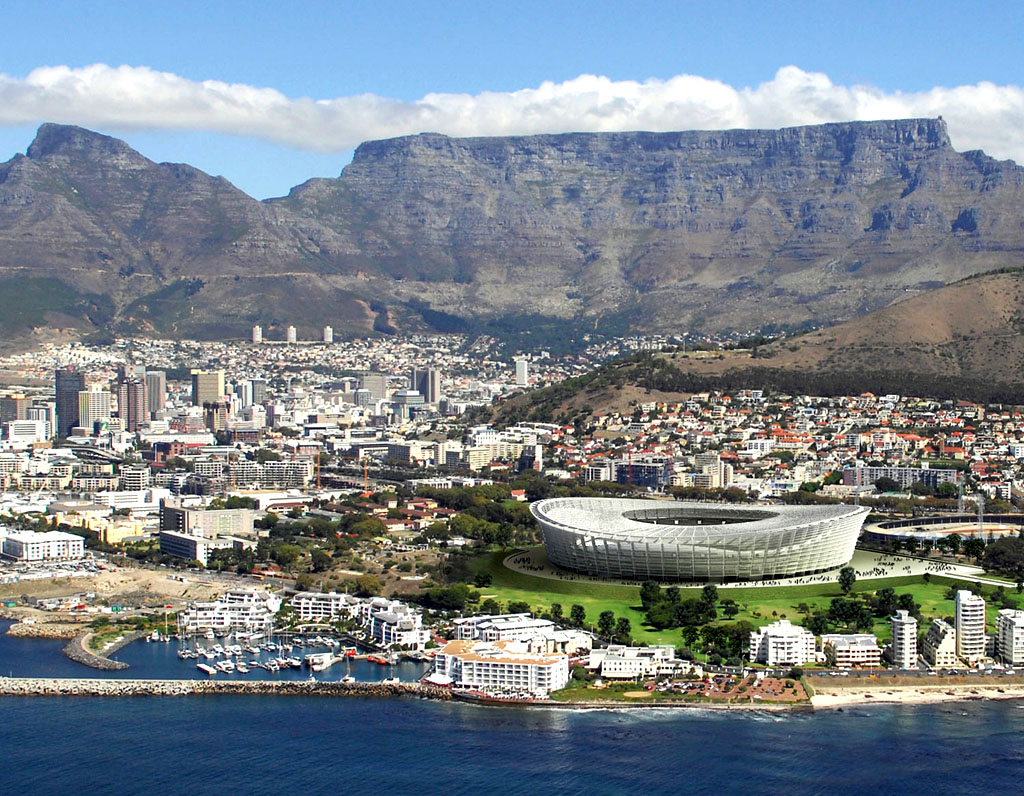
Cape Town is the capital of the Western Cape province of South Africa. The city is the country's most popular tourist spot with pristine white beaches arranged around a peninsula. Restaurants offer international cuisine with local flavours added to the mix. Accommodation is available that suits every budget from backpacker to jet-setter.
Cape Town is the southern point of South Africa where the first settlers landed in 1652 to start the long journey of the country's development. The city is not the actual dividing point between Atlantic and Indian Oceans. That honour goes to Cape Agulhas, further south from Cape Town. There are a number of museums that depict Cape Town’s unique history. Many buildings have been preserved over time and those who appreciate historical architecture will not be disappointed.
The 2010 World Cup Soccer resulted in an upgrade of sport stadiums that included Cape Town. The event united the cultures of Cape Town. It showed that black, coloured, white or any colour in between can forget about their differences and make the city a place where tourists feel welcome and safe.
Wine lovers who visit Cape Town are in for a treat. The wine regions around the city are all within five to thirty minutes’ drive from the city. These regions include Durbanville (within Cape Town area) and regions outside the city, e.g. Stellenbosch, Paarl and Somerset West. All these wine farms offer tastings and many of them have also opened some of their vineyards to mountain biking with trails that vary from easy to strenuous.
The long list of restaurants represents cuisine from almost every country in the world. Some restaurants specialize in local cuisine (African, Cape Malay and Afrikaans) and their ambience is often enhanced by music and even dancing.
African menus typically include red meat, game, chicken and “pap” (porridge) with gravy. These restaurants can be found in well-heeled tourist spots as well as townships. Barbequing is a favourite pastime on weekends, combined with beer drinking and watching sport like rugby. You’d be hard pressed to find anything but red meat and sausage on those barbeque grids. An alternative to the grid is a “Potjie”, where a pot is hung over coals to slow-cook a stew of meat and vegetables. Other popular Afrikaans and Cape Malay foods include Bobotie (a kind of meatloaf) and Chakalaka (a garnish of Indian origin). Some of the desert favourites are Koesisters (twisted pastries) and Milktart.
Seafood features well on Cape Town’s menus. A variety of shellfish and line fish is available at most restaurants. Traditional local ways of processing fish are “Bokkoms” (dried and salted fish) and smoked “snoek” (a local fish snubbed by some due to its many bones but very tasty when smoked).
Open-top busses will take you to most tourist spots on the peninsula. Specialised tours are available to the "townships" where low-income housing can be seen with small businesses thriving on the streets. No visit to Cape Town will be complete without a trip up the cable car to the top of Table Mountain, the iconic feature of the city. From here you have views that compare with those of the world's most spectacular cities. The Victoria and Alfred waterfront has departure points for a selection of boat trips around the main harbour and out to beaches such as Clifton. Another favourite destination for a boat trip is Robben Island. There you will find a museum that commemorates the years when there was a fully functioning prison on the island with Nelson Mandela its most famous inmate.
In addition to the standard bus service, the city is phasing in a brand new rapid transport system with dedicated lanes for buses. It has not reached all suburbs yet, but already includes a route from the airport into the city centre. Metrorail trains run only on major routes around the city, but outlying stations include Stellenbosch, Paarl and Somerset West.
Minibus taxis provide a cheaper alternative to regular sedan taxis, but their courageous drivers may not be for the faint-hearted. Some locals are uncomfortable with minibus taxis, but they’re safe as long as they are used within regular hours. Minibus commuters have adopted a unique sign language for hailing a taxi. Using only one hand they communicate with the “gaatchie” (conductor) of an approaching taxi about its route and destination to ensure it’s the one for them.
Cape Town has some interesting outings for nature lovers. Two of these are within twenty minutes’ drive from the city centre. The World of Birds is situated in Houtbay, a vibrant fishing village on the western side of the peninsula. You can stroll through the largest bird enclosure in Africa, carefully watched by owls. Butterfly World is near Klapmuts, north-east of the city. Here you can mingle with free-flying butterflies within safe distance from scorpions and spiders.
Within thirty minutes from the city on the southern side of the peninsula, by car or a scenic train route right next to the ocean, there are the quant fishing villages of Kalk Bay and Fish Hoek. There is a good variety of restaurants in Kalk Bay, the most popular being the Brass Bell, which over the years has developed into a hot spot for younger people where you can choose from six dining areas that range from formal to informal. Those interested in antiques and books should reserve at least half a day to browse the shops in Kalk Bay.
General information
All banks are open Monday to Friday 8h30 to 15h30 and Saturday mornings. Some banks are open on Sunday mornings. ATMs are in abundance. Temperatures vary between 13° and 28°C through winter (May to August) and summer (September to April). Tap water is safe to drink. English is spoken everywhere while some locals speak Afrikaans, the language that has its roots in Dutch.
As far as security is concerned, the same international travel rules apply in Cape Town. Don’t have valuables on display and don’t venture into suspect areas late at night.


Sunday, May 26, 2013

Alexandria, Egypt

An invitation to Alexandria, the pearl of the Mediterranean

By: Amna El-Tawil

When you hear the word Egypt, you think of the pyramids, the sphinx and pharaonic temples. What Alexandria has to offer is a slightly different Egyptian experience, however. This Mediterranean city has its own distinct culture and even its own unique weather. This is where Mideastern meets Mediterranean, and where the small city feel intertwines with metropolis features, leaving you with that very distinctive Alexandrian sensation.


What to wear
Alexandria is a pleasure to visit in every season. In winter, it’s at its quietest. The streets are washed with the pouring rain, and lay glistening under the city lights. It is one of the very few cities with rainy winters in Egypt. While hot blooded locals cover up in parkas and coats; those coming from cold countries will not feel the need for warmth. In fact, December in Alexandria is only slightly colder than summer in London during the day.  The winter temperature falls between 10 degrees Celsius at night and 20 degrees in the morning.

Alexandrian summers are all about the sea, the beach and the long sea-side Courniche.  You can go jogging in the morning while enjoying the scenery, and then have a light breakfast at one of the many sea view cafes. You will want to pack the lightest possible cloths. The temperature is usually in the mid-thirties and rises to forty degrees Celsius during the day. Summers in Alexandria get crowded as it is
considered a vacation spot for many locals from other cities. I would say the perfect ‘summer’ experience you can have in Alexandria would be in May and June. The heat is not as brutal, the beaches not as crowded, and the sunshine beautiful as ever.

Where to go

Bibliotheca Alexandrina
The modern day Library of Alexandria was built as a tribute to the Ancient Library of Alexandria that was accidentally burnt on the hands on Julius Caesar in 48 BC. Marc Anthony later gifted Cleopatra a collection of books to replace the burnt books.


Library and Museums
The modern day library is considered the main French library in Africa, and houses a rich manuscript museum, in addition to a museum of late Egyptian president Sadat; Nobel Prize winner and the initiator of the first peace treaty with Israel in the Middle East.

Concerts and Events
If you are looking for a night of free or very cheap, yet high quality entertainment, check the Bibliotheca Alexandrina’s event calendar. The library is home to many cultural events, and is considered the perfect place to attend a film viewing, a short lecture, a play or even a topnotch underground music concert (you would be surprised how good some of the local bands are).

· Down Town Alexandria
This is one of my favorite places in Alexandria, specially in winter. Down town Alexandria is the ultimate place for a long walk while window shopping and people-watching. You will find many merchants; some may be pushy, but a simple firm ‘no’ will put them off. If you are looking for souvenirs, this is where you will find them, just make sure you haggle to at least half the starting merchant offer.

Souvenir merchants in front of Qaitbay Citadel, down town
If you are lucky enough to have the chance to visit in winter, stroll the down town Alexandria streets for a feel of aged class and splendor in the ancient cafes and restaurants. Two restaurants you must try during your visits are located in down town: Santa Lucia; an upscale Italian offering live entertainment, delicious food, and the best service in town, and China House; a restaurant located on the roof of Cecil hotel offering one of the best views of the Courniche and the sea.

Saturday, May 25, 2013

Prague, Czech Republic

By Richard Barkand


If you take away the political borders, you might realize that Prague is located nearly in the center of Europe. It is part of the reason why many multinational companies have established offices in the Czech Republic’s capital city. It also helps to explain why so many travelers criss-crossing the continent make a point of adding Prague to their agenda.
But there is much more to the city than just a convenient stopping point. You know you are in an interesting place when you discover that the “New Town” district was first established in the year 1348.

Two of the most famous landmarks in the city are the Charles Bridge (construction began in 1357) and Prague Castle. But you do not have to limit yourself to only those two places. The neighborhoods on either end of Charles Bridge are full of narrow, crooked streets lined with restaurants, pubs, and craft shops. The weather is generally very pleasant from April to October, so you probably won’t mind losing track of time or your sense of direction.
Another must-see is the astronomical clock in Old Town Square. At the start of every hour, the clock performs a short, whimsical show. The square itself is full of beautiful buildings in different styles of architecture.


The public transportation system is modern, reliable, and inexpensive. An unlimited 24 hour pass costs 110 CZK (around $5.50 USD). Most locals buy a pass annually which costs around $240 USD.
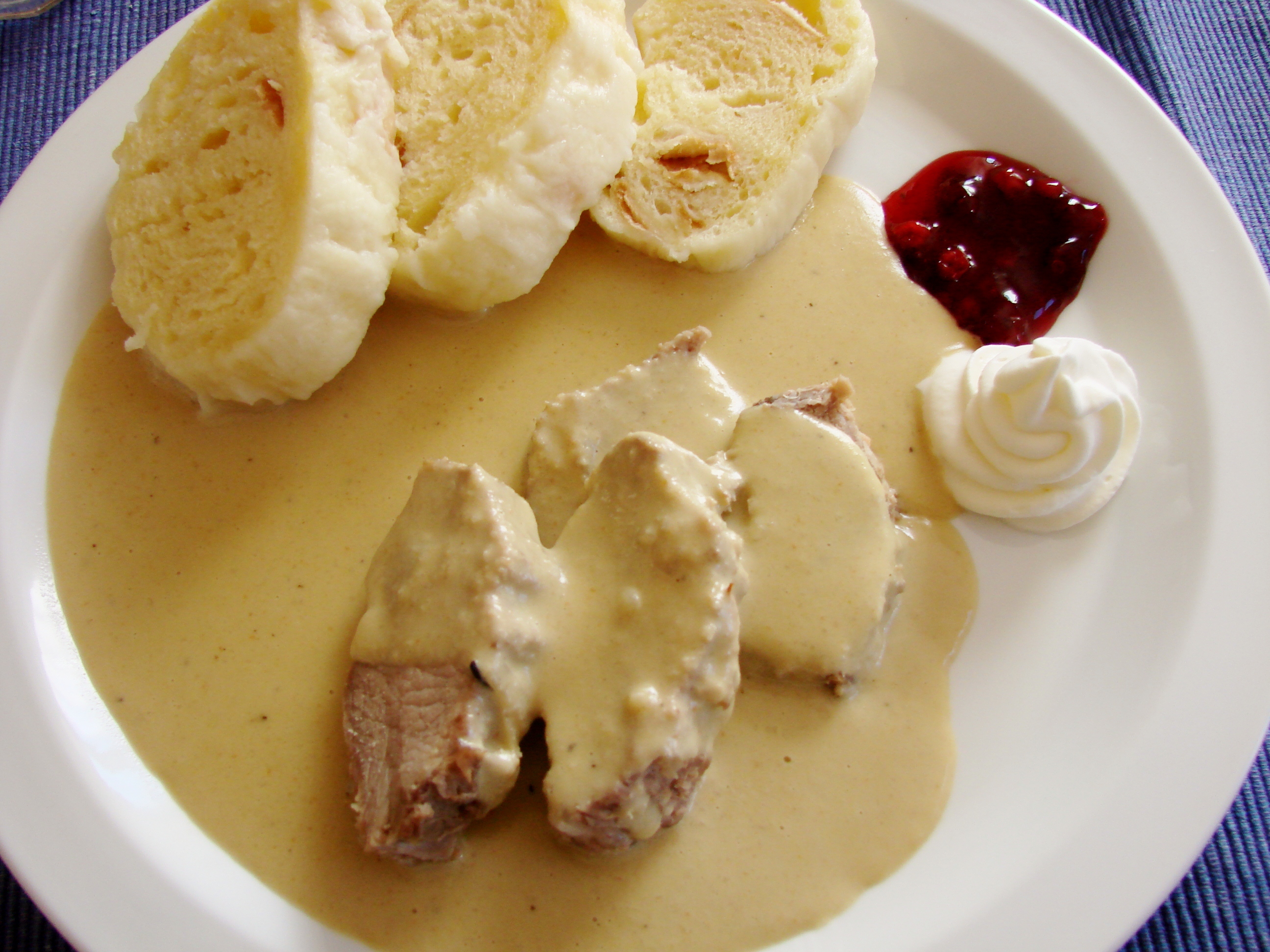
One thing that the city has not been known for is its cuisine. The traditional meat-centric dishes are readily available in nearly every neighborhood pub. One interesting and slightly unusual dish is called Svickova. It consists of marinated beef in a cream sauce with knedliky (dumplings) and, oddly, cranberries and whipped cream.


If you want something lighter, that’s ok. In the last five years, there has been a mushrooming of vegetarian restaurants and specialty shops offering fresh alternatives.
Speaking of mushrooms, for those who venture outside the city, mushroom picking is a favorite hobby of many Czechs. Go for a walk on one of the many well-marked hiking trails and you will certainly find people carrying baskets full of the various types of mushrooms growing in the forest. In fact, on summer weekends the city can feel a little empty. Many families have a chata (cottage) where they go to get a break from urban life.


Prague is also famous for its beer. And they do take their beer seriously here. The larger breweries employ inspectors who make visits to pubs and restaurants to check that their product is stored, poured, and served properly. Many microbreweries have sprung up recently to add more variety to the local beer culture.
After all, there is no better way to end a day of walking around the city’s stone and brick streets.
europe

London, England

London, England

By Nadia Farah Mokdad


‘When a man is tired of London, he is tired of life; for there is in London all that life can afford,’ said English writer Samuel Johnson, and it is just as true now as it was then. Inviting someone to London means inviting them to join a fast-spinning carousel of history, culture, nightlife and exciting people.


The capital of England is a city where everyone can find something to suit their tastes, from food to entertainment. It is easily accessible and has a well-developed public transport system, which, as a visitor, is preferable to going by car. Taking some of the many central bus routes (88, 29) is a wonderful way of experiencing not only the heart of London but also a ride on the famous double-decker bus. It is as fun as some movies show it be. However, if you prefer a more organised approach, there are companies like The Original London Sightseeing Tour which offer open-top bus tours stopping at most famous attractions.


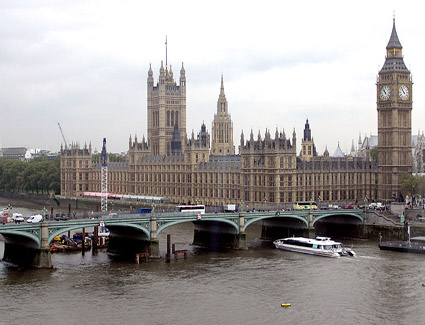
To best way to know the city, though, is to walk it. A good place to start is at London Eye, the renowned Ferris wheel which offers a magnificent, almost plane-like view of London. The ride experience is especially beautiful the closer it gets to evening time because the London lights are being switched on. From there on, you can cross Westminster Bridge to encounter the equally well-known House of Parliament with its sharp towers that shine golden on sunny days. If you get there at a sharp time, you can listen to the haunting chime of Big Ben. Westminster Abbey is only a couple of minutes’ walk away. It is a gorgeous Gothic building and home of the Poets’ Corner where many famous English poets are buried, for example, Poet Laureate Lord Alfred Tennyson.


From now on the city is a playground whose exploration gets dictated by personal taste. There are many things to fill the days, starting with seeing the royal jewels or walking around the execution site of Anne Boleyn at The Tower of London to having a stroll through Hyde Park or Kew Gardens. The possibilities seem endless, from museums and art galleries, west-end theatres and having afternoon tea at one of London’s tea rooms to enjoying a local band at The Blues Kitchen or dancing the night away in a club.

What is guaranteed for everyone, though, are interweaving streets lined by gorgeous historical buildings with an architecture spanning a wide variety of styles and periods. Many of these buildings host, on the ground floor, cafés and traditional English pubs. You can take a relaxing break from sightseeing and sample some traditional English cooking, like fish and chips or a Sunday roast (it usually consists roast beef served with roast potatoes, assorted vegetables and Yorkshire pudding), accompanied by a pint of ale or cider. For those that don’t enjoy the local cuisine, international alternatives are easily available, with Chinatown, in the Soho area, offering a variety of oriental restaurants, bakeries, etc.


Shopping enthusiasts will find themselves at home in the Oxford Circus area, clashing bags with other shoppers on Oxford Street and Reagent Street. A wide selection of shops is available from high-street brands to luxury ones. For visitors with more alternative tastes, Camden Town is a great place to be, not only for shopping at The Stables Market, where many handmade things are sold, but also for the eclectic mixture of quirky places and people.
That can also be said of London in its entirety because, no matter what you end up doing, you will leave having had a plentiful experience and probably an eager wish to return.
europe

Kampala, Uganda, Africa

Invitation to Kampala -my city.


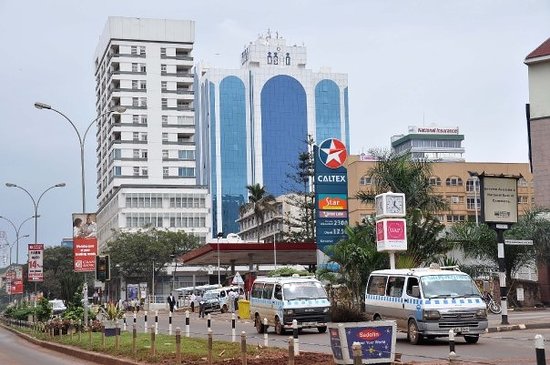
Kampala is the capital of Uganda and the largest city in the country.  
Location:

Kampala is located in Uganda East Africa and the city’s coordinates are: 00 19N, 32 35E.
Brief History

Kabaka Mutesa 1 had chosen the area that was to become Kampala as one of his favorite hunting grounds. It was made up of hills and wetlands. It was a bleeding ground for many game animals particularly the Impala. When the British colonialists came they named one of the hills the hill of Impala. Due to the large number of impala. The Baganda used this reference in their local language (Luganda) - 'Akasozi K'empala. So K’empala became 'Kampala due to repeated usage, and when the colonialists wanted a name for the city they adopted Kampala.

Major Attractions:
The are several major attractions in Kampala but the main ones are; Kasubi tombs which are located on Kasubi hill 5 kilometers from the city centre. It is a burial ground for 4 kings of Buganda and it is therefore significant for the loyal family and the entire Buganda kingdom. Then we have the Rubaga cathedral located on Rubaga hill. Many religious people come to the cathedral to warship and are one of the landmark buildings in Kampala. 
The Uganda museum is the oldest museum in Uganda formerly it was locate at Fort Lugard on old Kampala hill and now it is on kitante hill.
The bahai Temple located on kikaya hill 4 miles from Kampala city centre. It is the mother temple of Africa.


The Namugongo Martyrs’ shrine is situated 12 kilometers from Kampala city centre in Namugongo.


 It is where the Uganda martyrs were executed by Kabaka mwanga due to their failure to withdraw from their new adopted faith –Christianity. Namugongo shrine has been visited by many people Notably Archbishop Robert Runcie of Canterbury in 1984 and in 1993 pope John Paul II. In the whole country including the city Kampala June 3rd is a public holiday in honor of the massacre of the Uganda martyrs.

Food and accommodation
The hospitality industry in Kampala is well developed as evidenced by the CHOGUM 2007 conference and several international conferences that take place here every year. We have international hotels like the Sheraton hotel, Serena hotel, and Hilton hotel which is now under completion. We have several hotels which have achieved international standards, hotels like Speke Hotel, Emin Pasha Hotel, Fairway Hotel, Protea Hotel Kampala, Munyonyo Commonwealth Resort, and Golf Course Hotel, Grand Imperial, Mosa Court Apartments, Kabira Country Club and several others.
 When it comes to food there are many choices depending on the occasion you can enjoy dinner from a 5 star restaurant you can spend from 50cents USD to your highest limit. In fast food we have international brand like Nandos and Steers both on Jinja road, we have Domino's Pizza and several others.  There are a variety of restaurants to pick from Ugandan and the other available are Belgian, Chinese, Japanese, French, Turkish Mediterranean and Indian.

Night life and partying
Kampala has a very active night life from a slow and quite Ugandan bar to the fire of capital pub past 2: AM Kampala night life does not end well past the next day. I think there are very few cities across this continent that can rival our night life. We have several bars that include Al’s bar in Kansanga, Capital pub in Kabalagala, Rock Garden at speak Hotel, Bubbles O’Leary which is an Irish pub, steak out in Wandegeya; we have several night clubs which include Club Silk and Ange Noir.
Transport


In Kampala there are several means of transport which include bus, Taxi. Here we have to types of taxis one is a 14 sitter and the other we refer to it as special hire taxi. You can also use Bodaboda (Motor bike). You can also get a car from car hire services around the city for a self drive.
Security
Kampala is generally safe both day and night. We Ugandans are some of the most resilient people in the World:  We have seen wars, overthrows, dictators; bombing attacks come and go but for the last 27 years there has been stability in Kampala save for the 2010 terrorist attack.
Welcome to the city that never sleeps.

Friday, May 24, 2013

Vilnius, Lithuania

Vilnius

by Aurelija Brazenaite


Vilnius is the biggest city and the capital of Lithuania. Vilnius is located in the Southeast of Lithuania and even two beautiful rivers flow through it. Vilnius is one of the greenest capitals in Europe. More than 40 % of territory is covered with green trees and plants. Vilnius has five Tourism Information Centers. Go there and get your free maps and the best advices.
There are many interesting and attractive sightseeings that must be seen and many activities that you should try. From the Gediminas Castle hill you can admire green and historical Vilnius panorama or an amazing sunset, which all colors in red. If you really enjoy watching town’s panorama, you also should go to the Hill of Three Crosses.

The Old Town with small streets is worthy for tourists attention as well. There are several museums like Museum of Genocide Victims and the Cathedral in the heart of Vilnius. Vilnius is very rich with many churches of different styles and epochs. The most famous is gothic Ona Church. Once you are in Lithuania, do not miss your chance to visit very cozy artists’ district called Uzupis.
Nature lovers will be amazed by beautiful and very green Verkiai and Pavilniai National Parks. Also, there are other beautiful parks such as Sereikiskiai and Vingio.
Couples, singles or families can rent bikes, canoes. Also, you can take long promenades in the most beautiful parks or have some extreme sports like climbing trees.

Vilnius is full of restaurants, cafes and night clubs. If you are searching for places where to eat or have
fun, you will find it without any efforts. You should be aware that only 18 years old or in some places only 21 years old can enter a night club. Do not forget that most of night clubs are opened on weekends.
Lithuanians are friendly, but at first sight it may look contrary, because not everybody likes to speak with strangers, especially in other language. Mostly older people do not know English, but they know Russian language very well. You should ask younger people for advices or other help.

Try to avoid visiting sleeping dorms, dark places and market zones, where you can be robbed and cheated. Also, if possible never allow yourself to be provoked by drunken clubbers. You should know that prostitution is illegal in Lithuania, so be very careful with some women.
Most of Lithuanians are Christians and they do not have any special customs. They celebrate all National and Christian holidays. It is very common to say hello by shaking hands between men. Women kiss each other into cheeks only if they are very good friends.


People living in Vilnius often go to eat in local restaurants or cafes. Most of restaurants bring outdoor furniture for warm seasons. You can sit outside and watch passers-by and admire the town. You should try a cold soup called Saltibarsciai. It is made of kefir, eggs, cucumber, beetroots and onions. It is the best dish for the hot day. Also, do not forget to eat Cepelinai, which main ingredients are potatoes and
minced meat.

Lithuania is very famous for its tasty beer. Try our local live dark or light beer.
If you are a fan of fast food, you can go to McDonald's or Hesburger. Mostly Lithuanians do not eat fast food very often. They prefer cooking at home.

Vilnius has very good public transport infrastructure. Students, young persons and retirees prefer going by bus or by trolley. Working people usually go to work by car. You should be aware that you can stick in traffic after working hours.
europe

Almada, Portugal

Almada


Almada is a Portuguese city with around 175 000 inhabitants, being one of the most populated cities of Portugal. It has a big shore at west for the Atlantic Ocean and at North for the Tagus River, so it provides the city with a great potential for sun and sea tourism as well as country tourism. Almada rose as a city due to the industrialization from 19th century until the 70’s of the 20th century, its location near to the river allowed naval industries to supply jobs to families and give them good life conditions, although the city was very rural and behind the trends presented by the modern cities in Europe.

When Portugal adhered to the CEE, with the subsequent investment, the city of Almada also started to develop by developing the academic facilities like the Faculty of Sciences and Technology of Monte da Caparica and the Superior Institute of Egas Moniz where the academic spirit is well represented by young and dynamic people that give energy to the city with good programs to integrate all the population and the traditional academic events, like traditional festivals every week. One of the biggest struggles in Almada in the social inequality presented in the city that causes some assimetries, in terms of income and also safety, insecure areas are mainly in the perifery of the city.

The beaches of Costa da Caparica are the biggest touristic attraction of Almada, sun and beach in the summer with temperatures over 35ºC and with sports like surf, kitesurf, windsurf and bodyboard and good restaurants with fresh fish and acessible prices, and pubs and discos where anyone can have a good time and with acessible prices too, in average 10 to 20 €. If you prefer other types of tourism, there’s always the monument of Cristo Rei, where you can visit the top of it and you’ll have a great view of Tagus River and the entire city of Lisbon. If you want cultural activities, Almada provides the tourists with a great offer, with two big libraries, the City Forum Romeu Correia and the Jose Saramago City Library, both equipped with Audiovisual rooms, lobby, bar, newspaper rooms and a room which purpose is to held conferences, seminars, meeting or even areas to children. Almada has some recognized names at cultural level, like the former footballer Luis Figo, or the music bands like Xutos e Pontapés and Da Weasel or even Sara Tavares and Melech Mechaya

Almada is full of parks and nature, the environment has been a huge bet on the local government, so we can say that Almada is a green city. The kind of transportation used in Almada is mainly subway or bus. People often use the train, but to cross the bridge to go to Lisbon, which is the capital and where the majority of people get a job opportunity. Almada has a big problem with unemployment due to this proximity to the capital, so only small businesses are available in this city and one of the biggest shopping centers in Europe, the Almada Forum, where tourist can do some shopping and consuming fast food if they desire, but it would be a waste, since due to the proximity to the river and ocean, Almada has tradition in good local resturants. The inhabitants of Almada are very friendly and will welcome tourists in a good way.