Showing posts with label cities. Show all posts

Friday, June 28, 2013

Windhoek, Namibia, Africa


By Jothea Hite

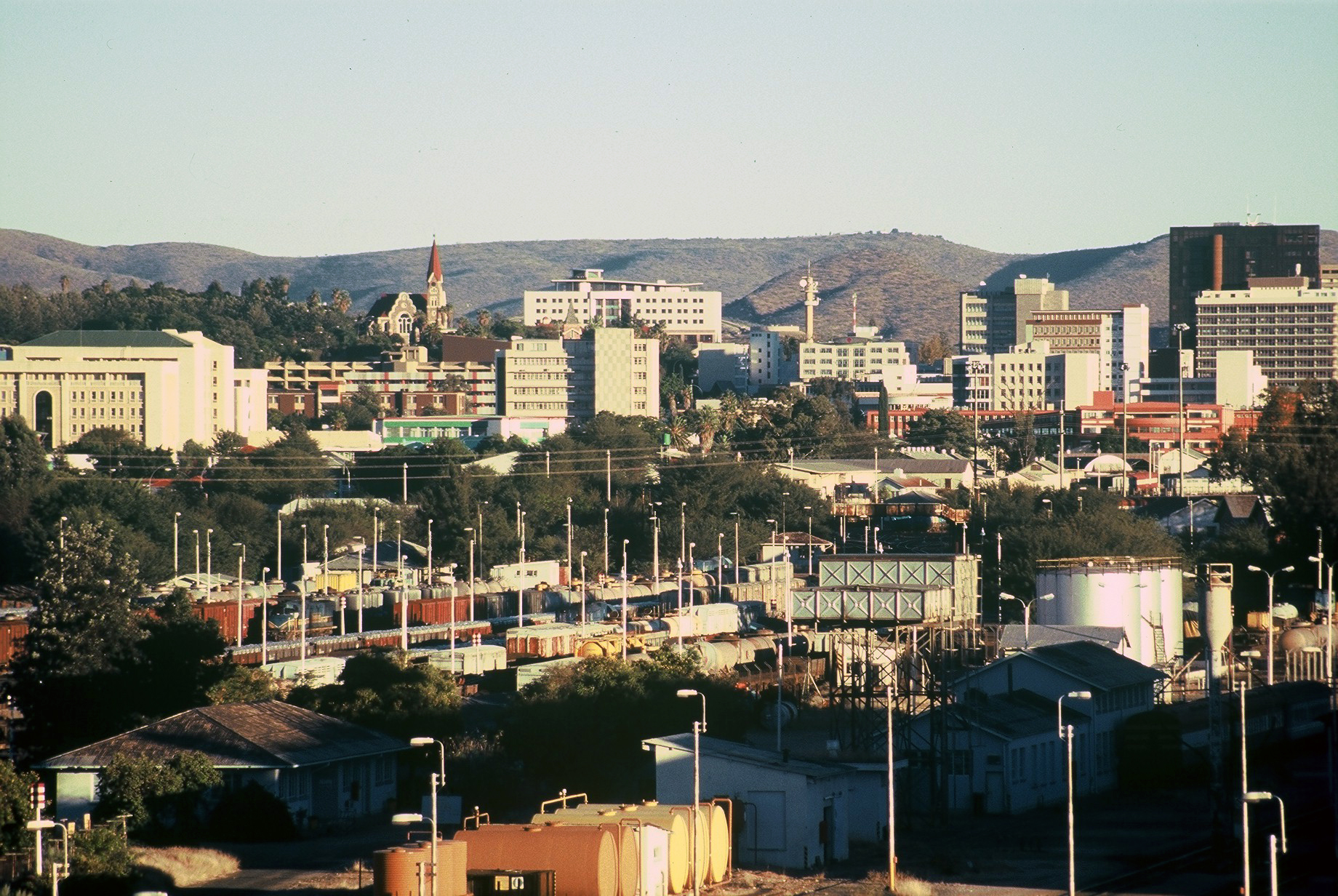
Namibia is a huge country with a small population due to its desert nature. With a population of 2,1 million according to the 2011 census, you will understand why the size of the capital city of the Republic of Namibia is what it is. With only 322 000 inhabitants counted in the same census, it seems like a village compared to capital cities such as London or Paris. Yet, we are a very cosmopolitan city with cultures from all across the globe. I have read reports by travellers that recommend tourists to skip Windhoek and that it is a boring city, but having lived here for nearly 25 years, I beg to differ.
As a melting pot of African, European and also Eastern cultures, I would say that Namibia’s true identity does not lie in its cities and towns, but rather in its natural beauty that spans millions of years.
Windhoek is not hundreds of years old like many European cities. It is only a 174 years old – and that’s taking it back to the settlement by Jonker Afrikaner, an Orlam captain, as a result of a spring that could provide water for his livestock. The German army founded the city again in 1890 after years of hostilities and strife. This brings the age of the city to only 124 years in European terms.
The German influence in architecture is still very evident in the older parts of town. A couple of well-preserved German shop-fronts still grace the main street, Independence Avenue, which in German times was know as Kaiser Strasse.
History is not only German, however. In front of the Tintinpalast – seat of Government situated East of Independence Avenue, you will find Parliament Gardens and a statue of Hosea Kutako, one of the many heroes of the Namibian independence struggle.
Being located at such a high altitude affords Windhoek the most moderate climate in the entire Namibia. Our winter days are basked in sun, with night-time temperatures often dipping to under zero, while our summers can be very hot and dry. Despite our location in a summer rainfall area, Windhoek is termed as semi-arid. In extreme years, we’ve had
virtually no rain, while we can usually expect an average of 300mm per year.
So, what we cherish most is our blue skies! We get depressed when it is dusty and dry and grey, because we are so used to crisp, clear blue skies. Then the mountains surrounding Windhoek stand guard around the Windhoek valley and you cannot but feel at home.
Home is meat in Namibia and you should not leave Windhoek without having a taste of the best beef or game sirloin or fillet you could find. Local delicacies called biltong and and droëwors (dried beef or game meat and dried sausage) are eaten by all; true to our Namibian meat-eating tradition, which is augmented by a good dose of German sausages,  cold meats and of course, beer made in the German tradition.
Windhoek does not have much of a night-life, but you will find many clubs and bars if that is what you want to do in Africa. If you prefer to rather watch the African sunset, make sure that you are on top of the roof of a well-known hotel or at one of the old castles in town. During the day, visit one of the many coffee-shops or restaurants in the town centre to feel the true buzz of life in Windhoek.
Serious party-time is very linked to the German Wika-festival and the Oktoberfest, but also the ǀAiǁGams Festival that is held by the City of Windhoek.
What I love most about Windhoek is the fact that you can drive for five or ten minutes and be out in the country. Windhoek is relaxed and laid-back and that is probably why I would not want to live anywhere else in the world.  

Tuesday, May 28, 2013

Paris, France

Paris, France, Europe

By Murielle Lucie Clément

One of the most beautiful cities in the world, Paris is often called “The City of the lights”. It is very true; that with her many streets lights and lighted shops windows till the middle of the night, Paris looks
gorgeous. During the day, one can visit numerous places (Place de Ternes, place Saint Michel, Montmartre, Jardins du Luxembourg, Boulevard Saint Michel, Saint Germain) museum (among them Le louvre is surely worth a visit to admire La Joconde), walk alongside the Seine. At night, one can visit many theaters (Châtelet, Les Bouches du Nord, Bercy), go to the opera or see films in many cinemas. This is common to all big cities in the world. But Paris is not like the other cities in the world. Paris has the Eiffel tower and the Champs Elysées!


Situated in the seventh arrondissement of Paris, the Iron lady towers the Seine near Quai Branly, just in front of the Iena Bridge. This tower is 324 meters high (if we consider the antenna at the top) and was build in 1887. During 41 years, it was the higher building in the world. Many people and personalities were against the construction; but nowadays it became the most popular symbol to represent the Elysées capital. Since 24th of June 1964 it is part of the long list of France’s historical monuments. In 1991, UNESCO declared it, along other Paris’ monuments, part of the world’s patrimonies.

Close to it, a huge place with green and decorated with statues and sculptures, fountains and stairs made of marble: le Champ de Mars and opposite to it “La Place du Trocadéro”. Wonderful surroundings where youth and elderly people cohabitate on sunny days.

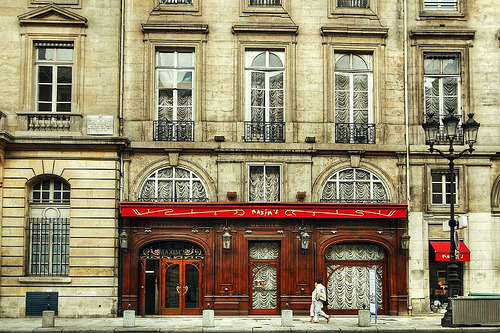
In Paris, of course, there are also lots of restaurant and smaller places to eat. A very celebrated place
is Maxim’s. The rendezvous of celebrities, French and foreign as well. Among the world famous hotels, one will go to Hôtel Lutetia, where during the war the Gestapo agents took quarter. After the war, people coming back from the camps were hosted in the beautiful chambers, waiting for their return to the villages where from they originated.

Like many other cities Paris has a long and interesting history. A visit to Paris is the assurance not to be bored. Gastronomic escapes, cultural occupation, slandering along streets from which history drips at every corner is awaiting to tell you many well kept secret and well known anecdotes.

You can join Paris, by air, by train, by car, even by boat sailing the Seine from Le Havre and passing
Rouen, another wonderful historical city.

Murielle Lucie Clément


europe

Saturday, May 25, 2013

Cebu, Philippines

Cebu, Philippines, Welcome to Paradise

By Bernadette Salas


Cebu is a city that has a little bit of everything for everyone.

To the world, it is best known as a beautiful tropical paradise. Home to white sand beaches, for years its natural beauty has been an attraction for tourists who craved the allure of the sun and sea. In the Philippines, Cebu is best known as a historic and cultural landmark. It was where Christianity was first introduced to the country by the Spanish conquistadors 492 years ago. It is here that the epic battle between Magellan and Datu Lapu-lapu happened, which resulted in the tragic death of the former.

Cebu is also one of the most progressive cities in the Philippines. We have a thriving BPO, IT and furniture-making industry. And of course, tourism is one of our major economic drivers as well. We may be a small city but you can find all the necessary modern conveniences you’ll need here.

When coming to Cebu, enjoying the beach should be first on your list. For those wanting to relax, you can simply lounge and savor the slower pace of life. For those who are feeling more adventurous, we have excellent diving spots in Mactan Island. A small boat called a banca


can also take you to the smaller islands surrounding Mactan that can best showcase the colorful variety of sea creatures and marine life in the area. You can also do all sorts of watersports such as jet skiing and parasailing too.

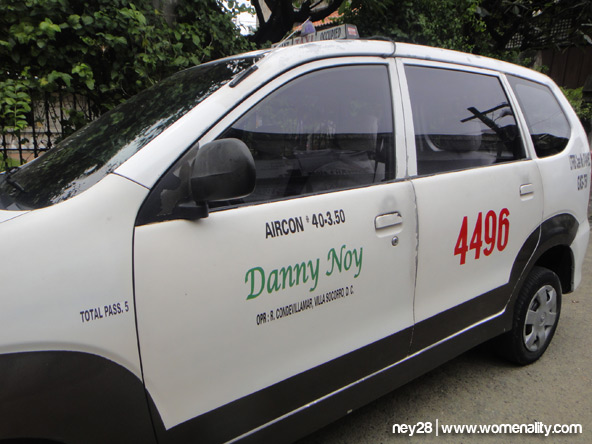
In terms of accommodations, you can choose to stay at a seaside resort or you can choose to stay in the city and commute to the beach. It’s only 30-40 minutes away by jeepney or taxi. And if you’re taking the taxi, it’ll only cost just around $6 one way. There are accommodations for every budget. And you can choose to stay at a guest house, a five star resort or something in between.


Your next agenda should be the food. According to Anthony Bourdain, we have the “best pig ever” in our lechon (slow pit-roasted whole pig). And of course, we have amazing seafood. Prawns, squid, fish, shells, you name we got it. You can have it grilled, stuffed or fried. And just for kicks, try the lato (seaweed) salad. It’s delicious! Typical Cebuanos also eat a lot of pork barbecue and chicken. It’s our favorite street food.

Finally, try to visit some of the cultural sites in the city. We have the oldest basilica in the country – The Basilica Minore del Santo Nino. The Basilica houses the miraculous Santo Nino or Child Jesus. Viewing and devotion can be done daily. So for the religious, it will be an interesting pilgrimage. For the curious, the church gives an interesting glimpse of religious life in the older days.

Our love for the Santo Nino is commemorated by a yearly street festival called the Sinulog. The Sinulog has a catchy signature beat and dance. And it has the most vibrant costumes! It’s truly the best religious street festival in the country. While a competition is held for the best dance presentations, the dancing and festivity pours out to the streets until the wee hours. So if you can time your visit to January, this festival is worth the trip.


People in Cebu speak English as a second language. So asking directions or assistance won’t be a problem. And we’re a relatively happy and helpful bunch of people so expect a lot of smiles all around. Be wary, however, of overly-friendly locals who offer all sorts of deals for a fixed price. They are likely to overcharge.

See you in Cebu!

Friday, May 24, 2013

Almada, Portugal

Almada


Almada is a Portuguese city with around 175 000 inhabitants, being one of the most populated cities of Portugal. It has a big shore at west for the Atlantic Ocean and at North for the Tagus River, so it provides the city with a great potential for sun and sea tourism as well as country tourism. Almada rose as a city due to the industrialization from 19th century until the 70’s of the 20th century, its location near to the river allowed naval industries to supply jobs to families and give them good life conditions, although the city was very rural and behind the trends presented by the modern cities in Europe.

When Portugal adhered to the CEE, with the subsequent investment, the city of Almada also started to develop by developing the academic facilities like the Faculty of Sciences and Technology of Monte da Caparica and the Superior Institute of Egas Moniz where the academic spirit is well represented by young and dynamic people that give energy to the city with good programs to integrate all the population and the traditional academic events, like traditional festivals every week. One of the biggest struggles in Almada in the social inequality presented in the city that causes some assimetries, in terms of income and also safety, insecure areas are mainly in the perifery of the city.

The beaches of Costa da Caparica are the biggest touristic attraction of Almada, sun and beach in the summer with temperatures over 35ºC and with sports like surf, kitesurf, windsurf and bodyboard and good restaurants with fresh fish and acessible prices, and pubs and discos where anyone can have a good time and with acessible prices too, in average 10 to 20 €. If you prefer other types of tourism, there’s always the monument of Cristo Rei, where you can visit the top of it and you’ll have a great view of Tagus River and the entire city of Lisbon. If you want cultural activities, Almada provides the tourists with a great offer, with two big libraries, the City Forum Romeu Correia and the Jose Saramago City Library, both equipped with Audiovisual rooms, lobby, bar, newspaper rooms and a room which purpose is to held conferences, seminars, meeting or even areas to children. Almada has some recognized names at cultural level, like the former footballer Luis Figo, or the music bands like Xutos e Pontapés and Da Weasel or even Sara Tavares and Melech Mechaya

Almada is full of parks and nature, the environment has been a huge bet on the local government, so we can say that Almada is a green city. The kind of transportation used in Almada is mainly subway or bus. People often use the train, but to cross the bridge to go to Lisbon, which is the capital and where the majority of people get a job opportunity. Almada has a big problem with unemployment due to this proximity to the capital, so only small businesses are available in this city and one of the biggest shopping centers in Europe, the Almada Forum, where tourist can do some shopping and consuming fast food if they desire, but it would be a waste, since due to the proximity to the river and ocean, Almada has tradition in good local resturants. The inhabitants of Almada are very friendly and will welcome tourists in a good way.