Showing posts with label city. Show all posts

Friday, June 28, 2013

Windhoek, Namibia, Africa


By Jothea Hite

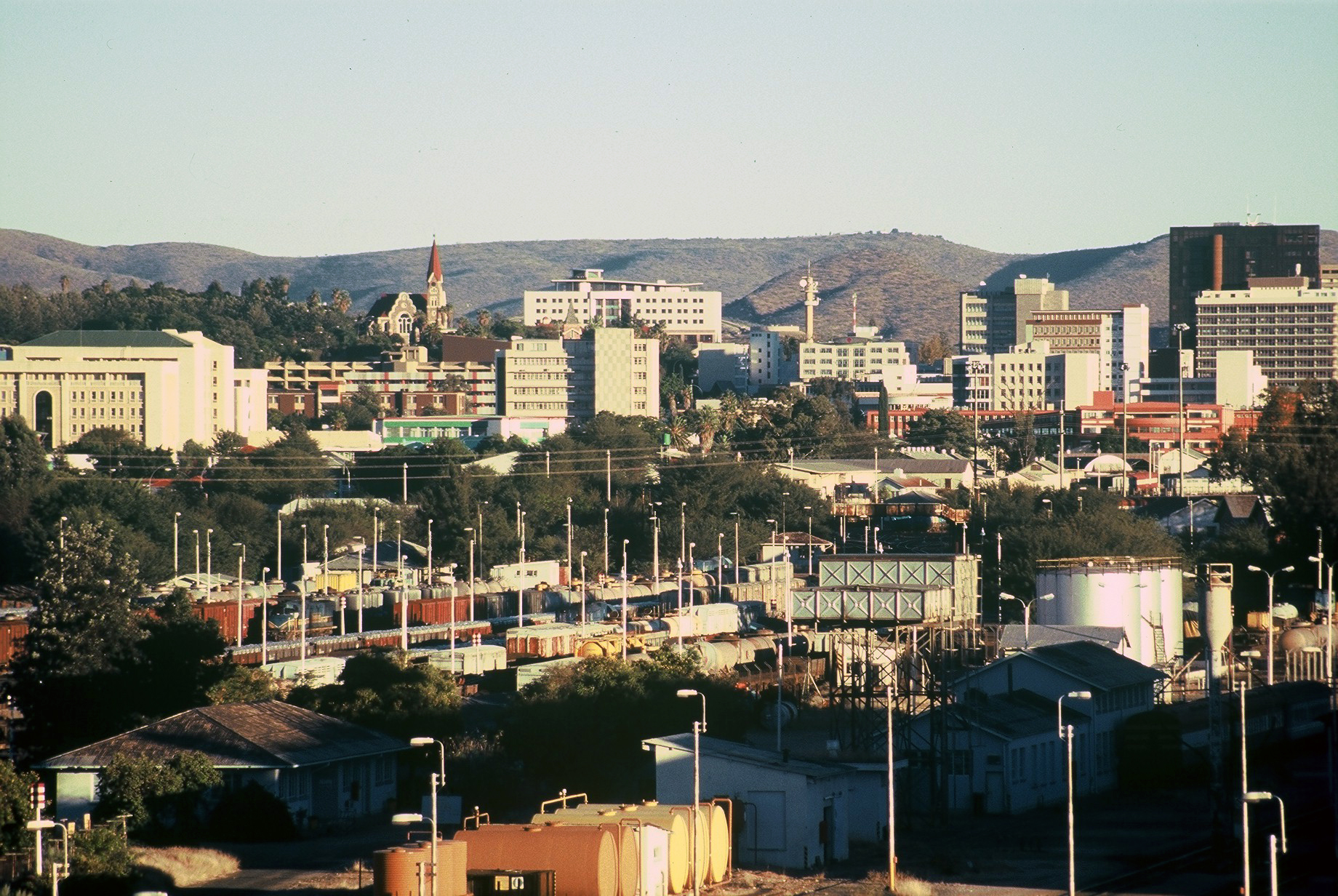
Namibia is a huge country with a small population due to its desert nature. With a population of 2,1 million according to the 2011 census, you will understand why the size of the capital city of the Republic of Namibia is what it is. With only 322 000 inhabitants counted in the same census, it seems like a village compared to capital cities such as London or Paris. Yet, we are a very cosmopolitan city with cultures from all across the globe. I have read reports by travellers that recommend tourists to skip Windhoek and that it is a boring city, but having lived here for nearly 25 years, I beg to differ.
As a melting pot of African, European and also Eastern cultures, I would say that Namibia’s true identity does not lie in its cities and towns, but rather in its natural beauty that spans millions of years.
Windhoek is not hundreds of years old like many European cities. It is only a 174 years old – and that’s taking it back to the settlement by Jonker Afrikaner, an Orlam captain, as a result of a spring that could provide water for his livestock. The German army founded the city again in 1890 after years of hostilities and strife. This brings the age of the city to only 124 years in European terms.
The German influence in architecture is still very evident in the older parts of town. A couple of well-preserved German shop-fronts still grace the main street, Independence Avenue, which in German times was know as Kaiser Strasse.
History is not only German, however. In front of the Tintinpalast – seat of Government situated East of Independence Avenue, you will find Parliament Gardens and a statue of Hosea Kutako, one of the many heroes of the Namibian independence struggle.
Being located at such a high altitude affords Windhoek the most moderate climate in the entire Namibia. Our winter days are basked in sun, with night-time temperatures often dipping to under zero, while our summers can be very hot and dry. Despite our location in a summer rainfall area, Windhoek is termed as semi-arid. In extreme years, we’ve had
virtually no rain, while we can usually expect an average of 300mm per year.
So, what we cherish most is our blue skies! We get depressed when it is dusty and dry and grey, because we are so used to crisp, clear blue skies. Then the mountains surrounding Windhoek stand guard around the Windhoek valley and you cannot but feel at home.
Home is meat in Namibia and you should not leave Windhoek without having a taste of the best beef or game sirloin or fillet you could find. Local delicacies called biltong and and droëwors (dried beef or game meat and dried sausage) are eaten by all; true to our Namibian meat-eating tradition, which is augmented by a good dose of German sausages,  cold meats and of course, beer made in the German tradition.
Windhoek does not have much of a night-life, but you will find many clubs and bars if that is what you want to do in Africa. If you prefer to rather watch the African sunset, make sure that you are on top of the roof of a well-known hotel or at one of the old castles in town. During the day, visit one of the many coffee-shops or restaurants in the town centre to feel the true buzz of life in Windhoek.
Serious party-time is very linked to the German Wika-festival and the Oktoberfest, but also the ǀAiǁGams Festival that is held by the City of Windhoek.
What I love most about Windhoek is the fact that you can drive for five or ten minutes and be out in the country. Windhoek is relaxed and laid-back and that is probably why I would not want to live anywhere else in the world.  

Wednesday, June 5, 2013

Sofia, Bulgaria

Sofia, Bulgaria  -Europe

Picture by wiki

By Milena Alexova


Every city has its own beautiful and exciting history. We will introduce to you the sides of the capital of Bulgaria – Sofia. It is the largest city in Bulgaria and its motto is “Grows but does not age.” The city has a 7000 year history. Therefore, a unique mix of cultural layers, including all peoples who left their mark on this land - by the Thracian tribe Serds in Macedonians under Philip II and Alexander the Macedonian, Roman Trajan, Attila's Huns, the Bulgars of Khan Krum Byzantines, Crusaders, Ottomans temporary Russian rulers Battenberg monarchs, Ferdinand and Boris, the Nazis and the communist government, until today.
For cultural sightseeing, we shall begin with presenting you one of the oldest churches in Bulgaria – the church “St Sofia”. It is built in the IVth century. The city is carrying its name, because during the XIVth century it was very popular. Side of the church you can find the Monument of the Unknown Soldier and the grave of Ivan Vazov – classic poet and writer. “St Sofia” depicts the coat of arms of the city.
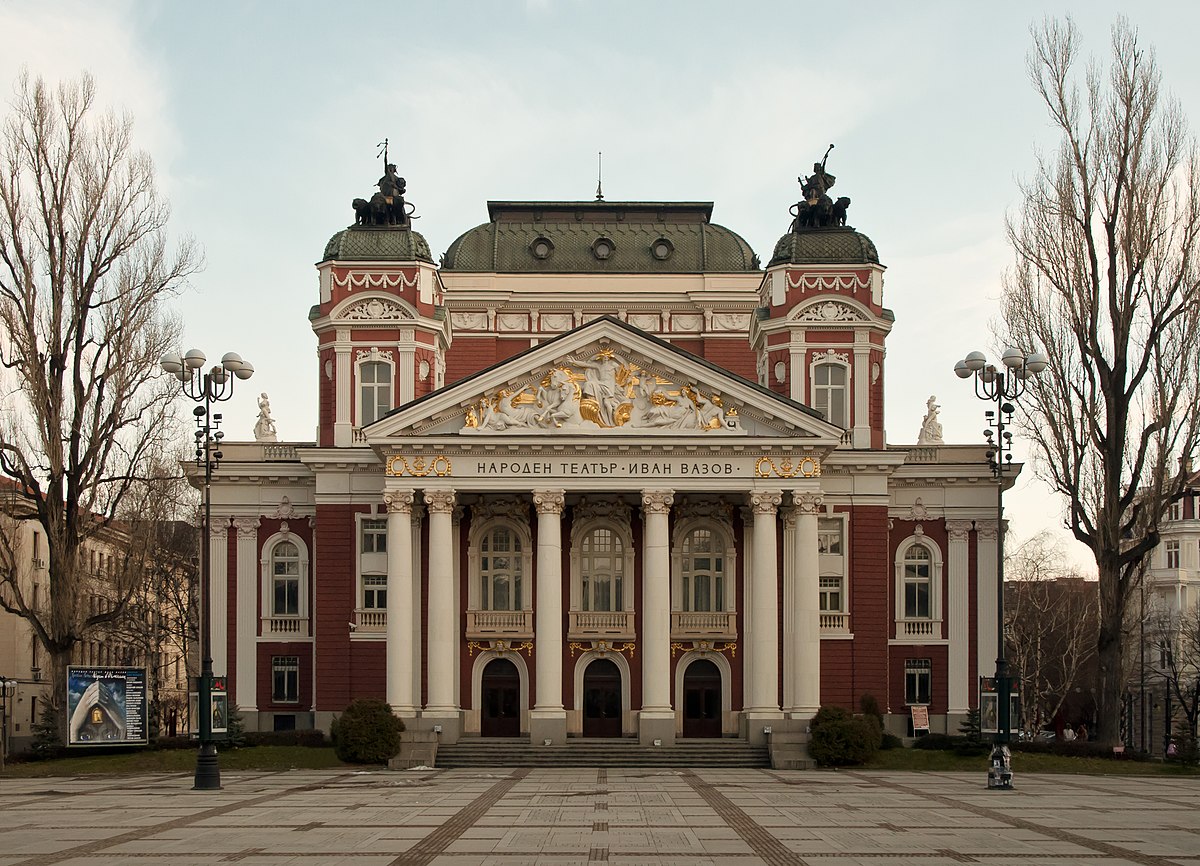
Built in 1906 by Viennese architects in neoclassical style, is the National Theatre ‘Ivan Vazov.’ It is the biggest theatre in Bulgaria and is also an architectural symbol of Sofia. It has an impressive facade is six columns supporting a triangular pediment on which depicts Apollo with the Muses of the arts. Moreover, it goes under the name of the famous Bulgarian poet and writer who we already introduced - Ivan Vazov.
Another influential building in Sofia is the National Art Gallery which is very close to the National Theatre ‘Ivan Vazov.’ The National Gallery is created in 1948. It is situated in part of the former princely palace of Alexander Battenberg. It is made in order to exhibit the most valuable works of Bulgarian artists and sculptors.
If you are a booklover, the right place for you to visit it Square ‘Slavejkov.’ This is an open bookstore where you can find everything - from books and textbooks to CD's and video games. It is named after the Bulgarian writer, journalist and politician Petko Racho Slavejkov.
Last but not least are the museums. There is a wide variety of museums depending on what your preferences are. For example, you can visit the National Museum of Military History – a military, research and educational institute; the National Museum ‘Earth and Man’ – a mineralogical museum with over 20 000 exhibited crystals and minerals from all over the world; National Anthropological Museum where you can find many reconstructed images of

Tuesday, June 4, 2013

Lusaka, Zambia, Africa

Lusaka – A Warm Welcome , Africa


Picture By: http://upload.wikimedia.org/wikipedia/commons/thumb/e/e9/Lusaka_-_Manda_Hill_Shopping_Centre.JPG/220px-Lusaka_-_Manda_Hill_Shopping_Centre.JPG

By Nick-Venter S. Edwards

A small nondescript village in the early 1920s, Lusaka is the bedrock of what is today the Republic of Zambia, a warm country by climate and hospitality.
Its central location, slightly to the south of the country’s centre, merited this village’s promotion to a capital city of the colonial administration of Northern Rhodesia.
Lusaka has rapidly grown into the bustling metropolis that it is today.
It is both the commercial and industrial hub of the country as well as the seat of government and parliament.

Lately it has been choking with an increase in population. Its poor planning has led to the congestion that is an identifying spectre of the sprawling city, with a lot of infrastructure springing up by the day.
The main entry point for most tourists is the Kenneth Kaunda International Airport, the largest facility, just about 25 minutes’ drive from the central business district. Driving from this airport, on Great East Road, gives the visitor a warm welcome to a bustling metropolis. All the way from the airport, the visitor is greeted by fast-paced urban scenery, with the convenience to check into the many amenities at the visitors’ disposal before they even set foot into the centre of the town.

Two big malls, very modern in their nature, and hotels by the side, the entry from the east is more than convenient for the tourist who, in the meantime, would have had a glimpse of the National Assembly.
The central business district is surrounded by a cluster of residential areas that are steadily exploding out of their size pushing the city inwards.

There is Matero, to the north-west of the city, a great historic township. This vast settlement was the hub of the many skirmishes in the struggle for independence. Matero is also the hub of the heavy industries, many of which are mere shadows of the cogs in the industrial machine of the city that they were in 1980s.

Lusaka is home to the country biggest university and

Monday, June 3, 2013

Wellington, New Zealand,

Wellington, New Zealand, Oceania

By Ryan Morris-Reade

Wellington is a vibrant, cosmopolitan city, surrounded by rugged coastline and the towering Rimutaka
mountain Range, locally known as the Rimutakas. It is New Zealand’s capital city (also the southern most capital of the world), and it’s New Zealand’s second largest city, although with a combined urban population of roughly 395,000, it isn’t actually very large at all.

The best time to visit is in Spring, Summer and the beginning of Autumn, which run from early December to late March. Visiting in Winter isn’t recommended as the weather can be cold and miserable for long stretches, with torrential rain and driving winds. While the city is famously known for its strong winds, and it can get very windy at times, it generally isn’t so bad in most areas. The winds are at their worst in the CBD, where in the 1970s many of the tall buildings were built with little regard for designing wind breaks into the structures, resulting in tall smooth buildings that allow the wind to flow down unhindered, causing mighty gusts that tear away umbrellas and sometimes sweep elderly people and children alike off their feet.

Wellington City is the cultural and creative hub of the Wellington region, with loads of art gallery’s, trendy cafés and comfortable bars. One of the best places to start exploring is Cuba Mall, the pedestrian street in the centre of the city, just south of the CBD. Cuba Mall runs for a few blocks and is littered with restaurants, bars, cafés, gallery’s, buskers and street preformers, op-shops and fashion boutiques. A good place to come and have breakfast in the morning and watch the interesting and colourful variety of people flowing past. Many of the cafés make excellent coffee and offer New Zealand’s unique cuisine, a mixture of styles from around the world.

One of the great things about Wellington’s small size is the ability to get around easily. If you don’t mind walking, you can reach many places on foot, and the public transport is fairly decent, with buses running all over the city (a lot of them electric), and a few trains to

Wednesday, May 29, 2013

Kidapawan City, Philippines

Explore Kidapawan City, Philippines, Southeast Asia
By:  Virgie Cadiente.

About The City:
Kidapawan City is located in the island of Mindanao, Province of Cotabato, Philippines. It is nestled at
the foot of the splendid Mt. Apo, the highest  mountain in the country.  The city’s name originated from Manobo (the city’s early settlers) words “Tida” which denotes spring and “Pawan” which denotes highland.  It is originally called Tidapawan  but the arrival of Christian settlers from different parts of the country has caused the transformation of the word Tidapawan to Kidapawan.  The city is also a home for several kinds of exotic fruits like durian, rambutan, mangosteen, lanzones, marang and banana,  thus obtaining the title  “The City of Fruits and Highland Springs”.  Fortunately, the city is deified with a propitious climate being positioned outside the typhoon belt.  Having a wet and dry season, December and January are the coolest months with April and May as the sultriest months are.

How To Reach Kidapawan
Kidapawan  City can be reached by air, sea and land transportation.  For air transportation, you can visit the following airlines:
1. Cebu Pacific Airlines
2. PAL Express
3. Philippine Airlines
Route (international tourists): Country of Origin to Manila
            Manila to Davao City
            Davao City to Kidapawan City – by bus, van or taxi only ( 2 hours)
If you want to take a bus, go to  Ecoland Terminal but if you want to

Manchester, England

Manchester, England, Europe
By Simon Parry

Not just home to the greatest football team in the world, Manchester is also often revered as the UK’s
unofficial second city—but shh! Don’t tell Liverpool. It’s got everything: history, music, rain, an eclectic nightlife, rain, rich architecture, food, high street shopping—oh, did I mention rain?
Manchester certainly lives up to the nickname, ‘The Rainy City’, but if you can brave the drizzle and live to tell the tale, you’re sure to have a story worth telling. This is especially so if you decide to take a tour of the city’s landmark buildings.  Step back in time to the Victorian period with neogothic cathedrals, town halls, railways and pubs, or jump further back to the industrial revolution with old cotton mills, canals, and museums.

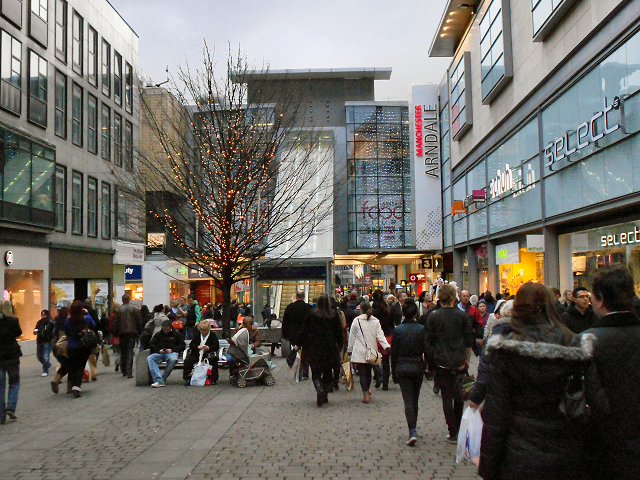
Once you've had your cultural fix of history, museums, and art galleries— of which there are many—it’s time for a spot of retail therapy.  From the high street shopping of the Arndale and Market Street, to the back street shopping of Afflecks and the Northern Quarter, Manchester really does cater for all. There are just as many vintage record shops, clothing boutiques, tattoo parlours, and independent comic book museums  as there are H&M’s and Topshop’s. And if you’ve a flare for the alternative side to fashion, look no further than Afflecks Palace, home to eclecticism.
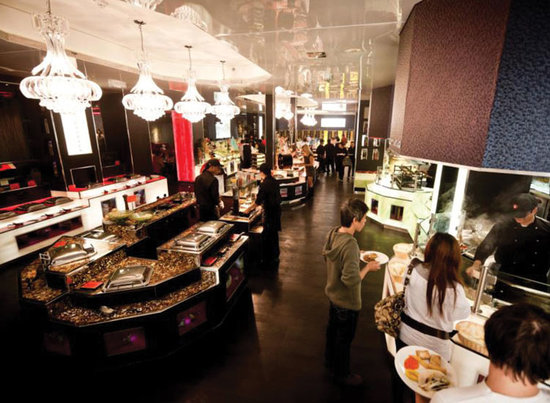
Shopping can, of course, work up an appetite, which is why Manchester pays homage to all the culinary styles of the world with over three hundred restaurants. Yes, you heard right— three hundred! That includes some of the most reputable restaurants in the UK, and the amazing Red Hot World Buffet.

There are also a collection of hidden gems scattered about, just waiting to be discovered in the backstreets of the Northern Quarter, including several superbly British tea houses.
They say on the sixth day God created MANchester.  Once the night comes alive, that could be true. When it’s time to party, no city in the UK does it better than Manchester. Dance music, pop music, R&B, metal—you name it, Manchester’s music scene has it. This great city has also been known to produce some of the world’s most influential music in recent times, from the likes of The Stone Roses, The Smiths, and Oasis, and who knows, you just might catch the next big thing in one of The Rainy City’s many clubs and bars.
So get the umbrella at the ready and take a trip into Manchester City Centre, where both the people and the places are larger than life and everybody is up for having a good time.

Europe

Tuesday, May 28, 2013

Taichung, Taiwan

Taichung, Taiwan, Asia

By Lianne Choo

Taichung: Taiwan’s Third Largest Jewel
Explore a world of food, culture and nature.

Taichung is the third largest city in Taiwan and is a jewel that many tend to overlook. Stay off the
beaten path and shrug aside the more obvious travel choice of Taipei and head further south to discover Taichung’s endless array of food, culture and nature. With a mix of luxury condos and colonial buildings, Taichung is a brilliant collision of old and new.

One of the things that Taichung is most famous for is bubble tea. Bubble tea is said to have been created at the original Chun Shui Tang teahouse so whether you are a fan of bubble tea, you have to make the effort to head over just so you can say that you had the ‘world’s original’ bubble tea.

Something else to experience in Taichung would have to be a night market. Head to the Feng Chia night market, the largest of its kind in Taichung. Stretching over several blocks, you are in for a real sensory treat. Must-try foods are Taiwan’s famous popcorn fried chicken, chicken chop, fried squid, stuffed chicken wings, stinky tofu, and grilled sausages.

One of Taichung’s main attractions is its maze of streets. Comprising of endless restaurants, auto garages, bars, and boutiques, Taichung offers visitors a vibe that closely resembles that of Japan. That being said, Taichung residents have a love for karaoke and these singing parlors are abundant in the city. Taichung is not well known for its nightlife and many say that clubbing is almost non-existent. However, all Taichung residents need to have a good time is a microphone and some cheesy music and they are all set to enjoy the rest of the night.

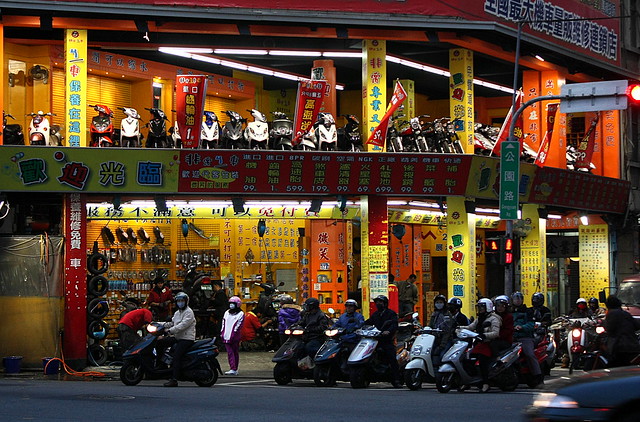
When navigating the narrow streets, beware of impatient scooters as they are known for paying zero
attention to their surroundings. The rule of thumb is to look out for them because they certainly are not going to look out for you. Collisions are common and are usually settled quickly without the interference of the police. Scooters are the main form of transportation for most Taichung residents although many others opt to drive or take the bus, which is an extremely efficient form of public transport. Visitors are advised to rent a car as this will give them the chance to explore Taichung’s myriad of natural wonders located outside the city centre.

Dakeng Scenic Area is the closest form of nature available to the Taichung urbanites.  Located 30 minutes away, visitors can enjoy hiking, biking and camping. Although it can get rather busy over the weekends, it remains pristine and perfectly maintained.

At the end of the day, one of the best things about Taichung is its people. Even though many do not speak English, they will try their level best to help tourists out, making Taichung one of the nicest and friendliest places in the world to visit.

asia

Monday, May 27, 2013

Singapore, Republic of Singapore

Singapore, Pearl of Asia

By Siny Sebastian


Enter the realm of the Lion city and you are sure to be enthralled by the beautiful sights that this wonderful and vibrant country is proud to show the world. The enchanted metropolitan island city with its diversified cultures, cuisines and vivacious night life has been able to charm and allure multitudes of modern globetrotter to its shore.
One of the most remarkable features of this island country is that it has been able to constitute 50 % of its area with greenery along with modern sky touching scrapers and subways. In spite of being one of the most densely populated countries, it still has 50 major parks and 4 national reserves within the small area and for this reason it is called the Garden City.
A look back into the history tells how the country got its name from the Malay word “Singapura”. According to the legend, Sang Nila Utama, a Srivijayan prince, landed on the island and, catching sight of a strange creature that he thought was a lion, decided to found a new city and thus “Singapura” or the “Lion City” was born.
Tourism is a major industry in Singapore and therefore we readily accept and seize any new and future oriented trends in leisure and entertainments. As a result of which, tourists consider Singapore as a place which is always full of fresh and new surprises and as a place worthy of repeat visits.
The diversity that the country offers in terms of religion, language, cultures are unparalleled when compared to its size. Tourists are able to communicate easily with the local people since English is one of the main languages along with Chinese, Malay and Tamil. Due to multiculturalism, there is no single set of culturally acceptable behavior.  People are of friendly nature and it is not uncommon to see shopkeepers and customers of multiple races engaging in animated conversations.

Singaporean food cuisine is touted as the potpourri of all cuisines. Food in particular is a steal, since
there is an extensive array of mouth - watering cuisines to satisfy every palate. The legendary hawker centers and coffee houses are open 24/7 and furthermore it is possible to relish these excellent hawker foods for under $5 for a generous serving. It is a paradise for the food lovers since they can try the local favorites like Laksa, roti prata or Chilli Crab or indulge in the international cuisines like Mexican, South East Asian, American, European and Middle Eastern cuisine in this clean city.  International fast food joints such as McDonald’s, KFC can also be seen in most of the shopping malls and is very much visible throughout the region.
Due to the excellent public transport system, it’s very much easy to move around the region. Most of the citizens travel by using bus, train and taxis. Train mode consists of both MRT and LRT. Taxis are also

Sunday, May 26, 2013

St. Paul, Minnesota, USA

St. Paul, Minnesota

By Pamela Sampson


St. Paul, is as diverse a city as they come. It offers big city experience in some areas while other places feel completely suburban. It is divided into many unique neighborhoods. As you There are just so many things to see and do here.
drive through the different areas of the city each place is distinctly different. It is the state capital of Minnesota and one half of the “twin cities” (a common nickname for Minneapolis/ St. Paul).

Mickey’s Diner is a famous little boxcar restaurant tucked right in the middle of it all. It is located near the Children’s Museum and Excel Energy Center where the Minnesota Wild Hockey team plays. If you like pizza, there is another lesser known place called Red’s Savoy Pizza on 7th street. Cossetta’s Italian Market and Pizzeria is an old favorite for many Minnesotans in the area. It opened in 1911 and just recently got a makeover.

History buffs will be excited to see Fort Snelling. Como Zoo and Observatory is located in a much more suburban area of the city. The zoo is free and they also have rides and a water area for the kids. Another thing that makes Como a favorite is the polar bear exhibit, which is not available at the bigger Minnesota Zoo. The Children’s Museum has four exciting levels of fun and imagination. They have everything from a play grocery store to a paint room to a stage for kids to get up and sing. The Science Museum located just down the road, offers learning for kids and adults. They have many different exhibits to keep everyone entertained.

If you come for a visit in the summer there will surely be plenty to keep you entertained. At the end of summer is “the great Minnesota get-together”. The state fair is never dull, with all the food you can find on a stick. Also held at the fairgrounds is “Back to the Fifties” in July.  You can even rent a bike if you choose and see the city in a whole new light.

If looking for some more adult fun, check out St. Paul’s nightlife. Station 4 is a little club where
they offer live music and local bands usually play. If you want less of the “typical tourist” scene it is a great place to go and be sure to leave a note on the chalkboard bathroom walls. In the area of St. Paul known as Dayton’s Bluff, there is a very popular place called the Minnesota Music Café. They have performances from local blues and rock bands, but they have even had headliners like Jonny Lang play.
St. Paul is rich with history and can be a very fun and exciting place to spend time. From Excel Energy Center to James J. Hill House to Como Zoo and Observatory there is such a wonderful feel to this city. There really is something here for everyone.

Alexandria, Egypt

An invitation to Alexandria, the pearl of the Mediterranean

By: Amna El-Tawil

When you hear the word Egypt, you think of the pyramids, the sphinx and pharaonic temples. What Alexandria has to offer is a slightly different Egyptian experience, however. This Mediterranean city has its own distinct culture and even its own unique weather. This is where Mideastern meets Mediterranean, and where the small city feel intertwines with metropolis features, leaving you with that very distinctive Alexandrian sensation.


What to wear
Alexandria is a pleasure to visit in every season. In winter, it’s at its quietest. The streets are washed with the pouring rain, and lay glistening under the city lights. It is one of the very few cities with rainy winters in Egypt. While hot blooded locals cover up in parkas and coats; those coming from cold countries will not feel the need for warmth. In fact, December in Alexandria is only slightly colder than summer in London during the day.  The winter temperature falls between 10 degrees Celsius at night and 20 degrees in the morning.

Alexandrian summers are all about the sea, the beach and the long sea-side Courniche.  You can go jogging in the morning while enjoying the scenery, and then have a light breakfast at one of the many sea view cafes. You will want to pack the lightest possible cloths. The temperature is usually in the mid-thirties and rises to forty degrees Celsius during the day. Summers in Alexandria get crowded as it is
considered a vacation spot for many locals from other cities. I would say the perfect ‘summer’ experience you can have in Alexandria would be in May and June. The heat is not as brutal, the beaches not as crowded, and the sunshine beautiful as ever.

Where to go

Bibliotheca Alexandrina
The modern day Library of Alexandria was built as a tribute to the Ancient Library of Alexandria that was accidentally burnt on the hands on Julius Caesar in 48 BC. Marc Anthony later gifted Cleopatra a collection of books to replace the burnt books.


Library and Museums
The modern day library is considered the main French library in Africa, and houses a rich manuscript museum, in addition to a museum of late Egyptian president Sadat; Nobel Prize winner and the initiator of the first peace treaty with Israel in the Middle East.

Concerts and Events
If you are looking for a night of free or very cheap, yet high quality entertainment, check the Bibliotheca Alexandrina’s event calendar. The library is home to many cultural events, and is considered the perfect place to attend a film viewing, a short lecture, a play or even a topnotch underground music concert (you would be surprised how good some of the local bands are).

· Down Town Alexandria
This is one of my favorite places in Alexandria, specially in winter. Down town Alexandria is the ultimate place for a long walk while window shopping and people-watching. You will find many merchants; some may be pushy, but a simple firm ‘no’ will put them off. If you are looking for souvenirs, this is where you will find them, just make sure you haggle to at least half the starting merchant offer.

Souvenir merchants in front of Qaitbay Citadel, down town
If you are lucky enough to have the chance to visit in winter, stroll the down town Alexandria streets for a feel of aged class and splendor in the ancient cafes and restaurants. Two restaurants you must try during your visits are located in down town: Santa Lucia; an upscale Italian offering live entertainment, delicious food, and the best service in town, and China House; a restaurant located on the roof of Cecil hotel offering one of the best views of the Courniche and the sea.

Pokhara City, Nepal

Pokhara City, Nepal, Asia

by Suman Ojha

Pokhara is the most beautiful city of country Nepal. It is a valley bounded by gorgeous green hills.
Within the valley also, there are little hills which culminate the beauty of the city. Beyond the surrounding hills are the snow-white mountains that can be seen from several parts of the city and more vividly from top of the nearby hills. Pokhara is a little heaven on a small land.

Nature has blessed the city with a number of bounties. It is also called city of Lakes. There are several lakes within the valley among which
Fewa Lake and Begnas lake have been the heart of the city. In addition, there are several adventurous caves like Mahendra Cave, Bats’ Cave and Gupteshower Cave. Devi’s Fall is another interesting and should-be-visited aspect of Pokhara. This is not the end, Seti River which flows through the heart of the city is well known for the George structures it has created through the path. These are only the natural gifts of the city; besides, there are several culturally and religiously valuable assets as well. World Peace Pagoda (at the top of hill surrounding Fewa Lake), Matepani Gumpa and Bindabasini Temple are other important cultural places for tourists.
A lot of opportunities are also available for adventurous people. If one wishes to see the whole valley in a glance, s/he might go to Sarankot Hill. It’s a tall hill on the western side of Pokhara valley from where you can get a telescope to view the every detail of the city. Moreover, you can do Paragliding over the Fewa Lake and in the sky above the city to enjoy the all round beauty. If this doesn’t satisfy you, then experiencing the world's steepest, fastest and tallest Zip Line will be waiting for you to give the ultimate thrill.
If tourists happen to visit around the New Year (January 1), they become lucky to experience Street Festival at the Lake Side (area near Fewa Lake). During this festival, Lake Side glows in light for the whole night. Moreover, during the time of October and November, tourists can see people celebrating Dashain (the greatest festival of Hindus). The festival runs for 10 days and all the people throughout the country celebrate this festival regardless of their religion. People take ‘tika’ on their forehead and blessings from their elders. Relatives living far away meet together on the occasion of Dashain festival and share their happiness and sorrows. Similarly, Holi is another exciting festival that is celebrated here. In this festival, people play by throwing colored powders on each other. It is believed as a celebration of victory of divine over the devil in the ancient past.
Tourists can move from one place to another within the city in public buses. However, if they have enough money, taxis can be easily available to them. In addition, they can hire a cycle for short rides and bike for long distance tours.
Another interesting speciality of Pokhara is Rainfall. It is the city that has the highest rainfall record throughout the country. Monsoon season is the best time to visit Pokhara for rain lovers. However, it can be annoying if the days become cloudy and one doesn’t get chance to get the view of bright mountains. Also, heavy rainfall might be unfavorable if one is planning to do boating. Yet, if you are fond of rafting, this is the best time for you.


These were only a few things about Pokhara city. No absolute beauty can be described in words, since it lies in the eyes of the beholder. So, visit Pokhara city and explore its immense beauty and hidden treasures.


Saturday, May 25, 2013

Prague, Czech Republic

By Richard Barkand


If you take away the political borders, you might realize that Prague is located nearly in the center of Europe. It is part of the reason why many multinational companies have established offices in the Czech Republic’s capital city. It also helps to explain why so many travelers criss-crossing the continent make a point of adding Prague to their agenda.
But there is much more to the city than just a convenient stopping point. You know you are in an interesting place when you discover that the “New Town” district was first established in the year 1348.

Two of the most famous landmarks in the city are the Charles Bridge (construction began in 1357) and Prague Castle. But you do not have to limit yourself to only those two places. The neighborhoods on either end of Charles Bridge are full of narrow, crooked streets lined with restaurants, pubs, and craft shops. The weather is generally very pleasant from April to October, so you probably won’t mind losing track of time or your sense of direction.
Another must-see is the astronomical clock in Old Town Square. At the start of every hour, the clock performs a short, whimsical show. The square itself is full of beautiful buildings in different styles of architecture.


The public transportation system is modern, reliable, and inexpensive. An unlimited 24 hour pass costs 110 CZK (around $5.50 USD). Most locals buy a pass annually which costs around $240 USD.
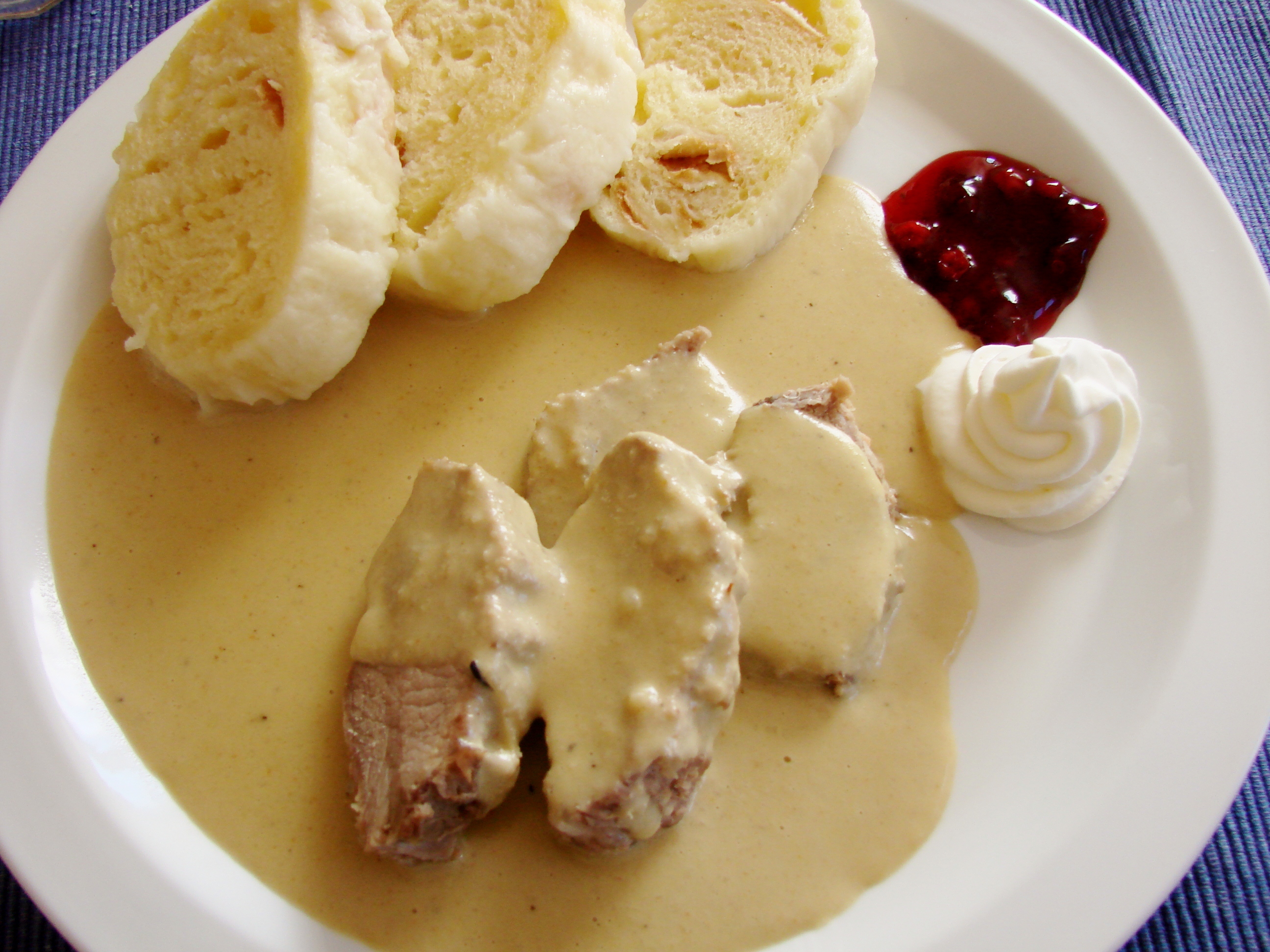
One thing that the city has not been known for is its cuisine. The traditional meat-centric dishes are readily available in nearly every neighborhood pub. One interesting and slightly unusual dish is called Svickova. It consists of marinated beef in a cream sauce with knedliky (dumplings) and, oddly, cranberries and whipped cream.


If you want something lighter, that’s ok. In the last five years, there has been a mushrooming of vegetarian restaurants and specialty shops offering fresh alternatives.
Speaking of mushrooms, for those who venture outside the city, mushroom picking is a favorite hobby of many Czechs. Go for a walk on one of the many well-marked hiking trails and you will certainly find people carrying baskets full of the various types of mushrooms growing in the forest. In fact, on summer weekends the city can feel a little empty. Many families have a chata (cottage) where they go to get a break from urban life.


Prague is also famous for its beer. And they do take their beer seriously here. The larger breweries employ inspectors who make visits to pubs and restaurants to check that their product is stored, poured, and served properly. Many microbreweries have sprung up recently to add more variety to the local beer culture.
After all, there is no better way to end a day of walking around the city’s stone and brick streets.
europe

Alba Iulia, Romania

Alba Iulia,  The Fortress of Transylvania

By Bogdan Alexandru Suciu 


             Alba Iulia is a city full of wonder , the heart of Romania, the fortress of Transylvania. This city , without doubts , had the biggest and the most important role in the history of  Romania . From Alba Iulia the nation began to flourish.
Alba Iulia is located in a tourist area and it is very attractive to travelers, who are  received and welcomed with great hospitality on this land. The tourist potential of the area finds its reflection in a broad constellation of evidence of  a past millennia, expressed in chain monuments of architecture and art, in a variety of natural beauties.
  Alba municipality was in ancient times a human civilization hearth where specific Romanian folk customs and traditions exert a special attraction for tourists from home and abroad.
If you are new on this land  , there are a variety of  possibilities to develop. So here are some great attractions for the passionate tourists. One of the most interesting things to see is the exchange of guard ceremony that takes place on Saturdays and on Sundays at the Third Gate. The entire ceremony takes place as it used to be in the medieval period, when Alba Iulia was probably the most impressive fortress from the Eastern part of Europe.


During this ceremony , the riders with their horses  and the soldiers use to march and surround  the fortress to the delight of the public that come in large numbers.

Alba Iulia is full of other attractions for example The Orthodox Cathedral, known as Coronation Cathedral, is the artistic expression of our national unity achieved by the Act of 1918. The building has a shape like a Greek cross. The entrance to the church is through an open porch with large arches, supported on four columns with capitals.
Another very important historical monument located near the Orthodox Cathedral is The Roman Catholic Cathedral built in the thirteenth century. It is the most valuable monument of early Transylvanian medieval architecture, harmoniously combining the elements of the Gothic and Roman architecture.


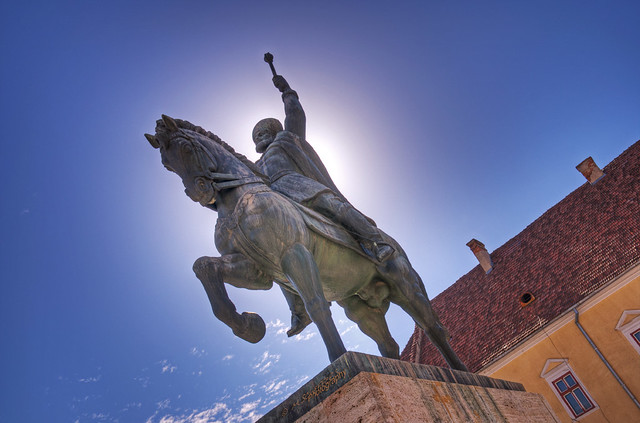
Near the Roman Catholic Cathedral we can find the statue of Michael the Brave, one of the greatest rulers of Romania.  There are many other monuments , historical buildings , National Museums where you can find valuable objects from ancient times that have more than 2000 years of existence , the union Hall, the Old part of town and a very big fortress surrounded by channels , caves and caverns and if I will mention them all probably I will not finish today with the enumeration. Another thing that I would like to say and emphasize is that only the entire fortress has more than 10 tourist routes and during these routes you can ride horses and drive using the  medieval carriage.
In the end I would like to mention one more monument. Having a great importance for the Romanian culture the Library Bathyaneum is a major  historical objective for Alba Iulia. It is known worldwide for its collections of great value representing manuscripts and rare prints
So what are you waiting for? Do not waste your time ! Come and visit Alba Iulia, The Heart of Romania !
europe

Islamabad, Pakistan

By Ansab Khan

Islamabad - The capital city of Pakistan, *City of peace* and *The Green city* is one of most beautiful and peaceful cities of the world which is located at the northern end of Pothowar Plateau. It has a healthy, pleasant climate and pollution free atmosphere. It is a well-planned and developed city with different sectors and zones. Each of these sectors has shopping malls called *Markaz* where people go and enjoy their shopping. Islamabad has attracted people from all over the Pakistan, making it one of the most cosmopolitan and urbanized cities of Pakistan.


The major places of interest in Islamabad for tourists are Faisal mosque, (one of the beautiful and largest mosque in the world), Daman-e-koh, Pakistan museum of natural history, lake view park, lok virsa museum, japanese park, Shakar pariyan, fatima jinnah park, national art gallery, bari Imaam shrine, golra Sharif, and many more. One thing more which tourists love about Islamabad is its smooth and tswited roads. There are ample opportunities for walking, jogging, hiking and trekking around Islamabad in the Margalla Hills. Supreme Court of Pakistan and parliament house is also in Islamabad with their great importance.

Pakistani food is famous all over the world due to its taste and mouthwatering recipes. Some famous places in Islamabad where people mostly like to go and eat are Savor foods, KFC, Blue area and aabpara food streets. Crispy parathas, spicy barbeques and other traditional food items besides fresh juices and ice cream are easily available at all major spots of the metropolis where shops remain open the whole night. Eating out in late hours has become a popular trend in Islamabad especially on weekend nights. In last couple of years a new trend of giving bouquets to your friends and relatives on special events has started in Islamabad. If you are in Islamabad and planning to meet any of your friends, relatives or loved ones, then presenting a fresh flower bouquet would leave a great impression of love and care.


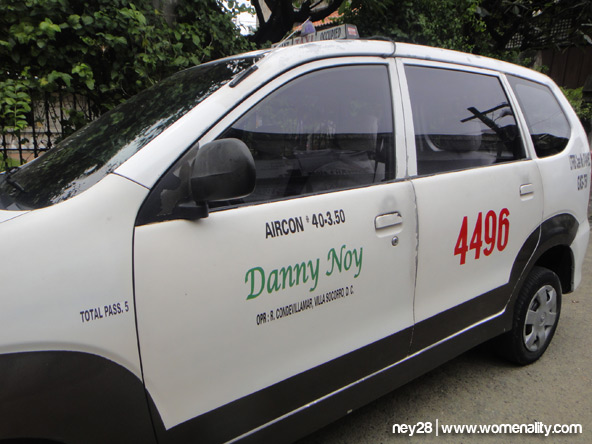
The most iconic form of transport in Islamabad is of course the decorated buses with pure art on wheels clanging metal frills along the bodywork, Undecorated van style minibuses for short routes through the city and the taxis *back window decorated with stickers, reflective pieces and all manner of trinkets hanging from the rear view mirror* in Islamabad are easy to spot.
Islamabad is a lovely place to visit. The weather of Islamabad is very refreshing. I myself love the greenery. It’s the heart and soul of Pakistan, a city which symbolizes the aspirations of a young and dynamic nation that looks forward to a glorious future for its people, a city which welcomes modern ideas but at the same time recognizes and cherishes its traditional values and its past history.

Cebu, Philippines

Cebu, Philippines, Welcome to Paradise

By Bernadette Salas


Cebu is a city that has a little bit of everything for everyone.

To the world, it is best known as a beautiful tropical paradise. Home to white sand beaches, for years its natural beauty has been an attraction for tourists who craved the allure of the sun and sea. In the Philippines, Cebu is best known as a historic and cultural landmark. It was where Christianity was first introduced to the country by the Spanish conquistadors 492 years ago. It is here that the epic battle between Magellan and Datu Lapu-lapu happened, which resulted in the tragic death of the former.

Cebu is also one of the most progressive cities in the Philippines. We have a thriving BPO, IT and furniture-making industry. And of course, tourism is one of our major economic drivers as well. We may be a small city but you can find all the necessary modern conveniences you’ll need here.

When coming to Cebu, enjoying the beach should be first on your list. For those wanting to relax, you can simply lounge and savor the slower pace of life. For those who are feeling more adventurous, we have excellent diving spots in Mactan Island. A small boat called a banca


can also take you to the smaller islands surrounding Mactan that can best showcase the colorful variety of sea creatures and marine life in the area. You can also do all sorts of watersports such as jet skiing and parasailing too.

In terms of accommodations, you can choose to stay at a seaside resort or you can choose to stay in the city and commute to the beach. It’s only 30-40 minutes away by jeepney or taxi. And if you’re taking the taxi, it’ll only cost just around $6 one way. There are accommodations for every budget. And you can choose to stay at a guest house, a five star resort or something in between.


Your next agenda should be the food. According to Anthony Bourdain, we have the “best pig ever” in our lechon (slow pit-roasted whole pig). And of course, we have amazing seafood. Prawns, squid, fish, shells, you name we got it. You can have it grilled, stuffed or fried. And just for kicks, try the lato (seaweed) salad. It’s delicious! Typical Cebuanos also eat a lot of pork barbecue and chicken. It’s our favorite street food.

Finally, try to visit some of the cultural sites in the city. We have the oldest basilica in the country – The Basilica Minore del Santo Nino. The Basilica houses the miraculous Santo Nino or Child Jesus. Viewing and devotion can be done daily. So for the religious, it will be an interesting pilgrimage. For the curious, the church gives an interesting glimpse of religious life in the older days.

Our love for the Santo Nino is commemorated by a yearly street festival called the Sinulog. The Sinulog has a catchy signature beat and dance. And it has the most vibrant costumes! It’s truly the best religious street festival in the country. While a competition is held for the best dance presentations, the dancing and festivity pours out to the streets until the wee hours. So if you can time your visit to January, this festival is worth the trip.


People in Cebu speak English as a second language. So asking directions or assistance won’t be a problem. And we’re a relatively happy and helpful bunch of people so expect a lot of smiles all around. Be wary, however, of overly-friendly locals who offer all sorts of deals for a fixed price. They are likely to overcharge.

See you in Cebu!

Nairobi City, Kenya

by  Jacob Muoki

Picture By: http://images.businessweek.com/ss/09/03/0304_difficult_cities/image/008_nairobi.jpg


Nairobi City, Kenya Brief History Established in 1889 during the building of the Kenya-Uganda railway, Nairobi stands as the Kenya’s capital and East Africa’s most populous city. It’s the most industrialized city in the country and is inhabited by people of all walks of life and members of the 42 different Kenyan tribes. Nairobi is a regional business hub and hosts the United States Embassy (the biggest in East Africa) and the United Nation’s UNEP and UN-Habitat headquarters. The city’s growth as a technology hub in the entire continent of Africa has attracted the attention of technology giants such as Google and Cisco Systems, who have established their continental headquarters there.
Major Attractions The main tourist attraction in Nairobi is the Nairobi National Park, the only one in the world located in a capital city. The park hosts a wide array of wildlife including cheetahs, buffaloes, and hyenas and over 400 species of birds. Other attractions in the park include an animal orphanage and the Safari Walk. Located 7 kilometres from the CBD, the National Park can be accessed via road or air (Jomo Kenyatta International Airport and Wilson Airport).
Food and Accommodation Nairobi hosts several world-class hotels, which tourists and other visitors may find suitable for short-term accommodation. The Sarova Stanley, Intercontinental, Hilton, Nairobi Serena and Norfolk are some of the luxury hotels located in the heart of the city. The Safari Park Hotel is 15 minutes drive from the CBD off Nairobi-Thika super highway. The hotels serve a wide range of international cuisines as well as the country’s popular version of barbecued meat that the locals refer to as “Nyama Choma”.

Nightlife and Partying Many tourists don’t leave Nairobi before they’ve visited the Carnivore restaurant, which is home to the Simba Saloon night club. The club is located about five kilometres from the CBD towards Langata. Other night clubs in the city include Betty’s in the CBD and Changes in Westlands area. There, revellers are treated to a combination of hip hop music, reggae and local tunes popularly referred to as “Genge” or “Kapuka”.
Transport International visitors arrive at the city via Jomo Kenyatta International Airport in Nairobi. Alternatively, visitors entering Kenya via Moi International Airport in Mombasa may commute by rail, road or air to Nairobi. Jomo Kenyatta International Airport is about 15 kilometres from the CBD and is accessed via cabs (taxis). Visitors from Mombasa may choose to commute by train, which is relatively slow and may take up to 16 hours to get to Nairobi. Movement around the city or to towns nearby is possible via taxis or car hire services. Many tourists don’t use public transportation except in cities served by rail or long-distance luxury bus companies. This is because only these guarantee passenger safety and professionalism.
Security Nairobi’s CBD and all other areas of tourist interests are for the most part secure. Ever since the 1998 bombings of the American embassy in Nairobi, security has been beefed up around the city and an elite tourist-protection police unit set up. However, the American government has issued and lifted travel advisories against Nairobi more than once since 1998. Thus, the city, especially US, European and Israeli interests, remain potential targets of terror attacks. However, visitors that avoid city estates and areas such as the Kibera slums and Eastlands remain safe from day to day threats to security.

Friday, May 24, 2013

Vilnius, Lithuania

Vilnius

by Aurelija Brazenaite


Vilnius is the biggest city and the capital of Lithuania. Vilnius is located in the Southeast of Lithuania and even two beautiful rivers flow through it. Vilnius is one of the greenest capitals in Europe. More than 40 % of territory is covered with green trees and plants. Vilnius has five Tourism Information Centers. Go there and get your free maps and the best advices.
There are many interesting and attractive sightseeings that must be seen and many activities that you should try. From the Gediminas Castle hill you can admire green and historical Vilnius panorama or an amazing sunset, which all colors in red. If you really enjoy watching town’s panorama, you also should go to the Hill of Three Crosses.

The Old Town with small streets is worthy for tourists attention as well. There are several museums like Museum of Genocide Victims and the Cathedral in the heart of Vilnius. Vilnius is very rich with many churches of different styles and epochs. The most famous is gothic Ona Church. Once you are in Lithuania, do not miss your chance to visit very cozy artists’ district called Uzupis.
Nature lovers will be amazed by beautiful and very green Verkiai and Pavilniai National Parks. Also, there are other beautiful parks such as Sereikiskiai and Vingio.
Couples, singles or families can rent bikes, canoes. Also, you can take long promenades in the most beautiful parks or have some extreme sports like climbing trees.

Vilnius is full of restaurants, cafes and night clubs. If you are searching for places where to eat or have
fun, you will find it without any efforts. You should be aware that only 18 years old or in some places only 21 years old can enter a night club. Do not forget that most of night clubs are opened on weekends.
Lithuanians are friendly, but at first sight it may look contrary, because not everybody likes to speak with strangers, especially in other language. Mostly older people do not know English, but they know Russian language very well. You should ask younger people for advices or other help.

Try to avoid visiting sleeping dorms, dark places and market zones, where you can be robbed and cheated. Also, if possible never allow yourself to be provoked by drunken clubbers. You should know that prostitution is illegal in Lithuania, so be very careful with some women.
Most of Lithuanians are Christians and they do not have any special customs. They celebrate all National and Christian holidays. It is very common to say hello by shaking hands between men. Women kiss each other into cheeks only if they are very good friends.


People living in Vilnius often go to eat in local restaurants or cafes. Most of restaurants bring outdoor furniture for warm seasons. You can sit outside and watch passers-by and admire the town. You should try a cold soup called Saltibarsciai. It is made of kefir, eggs, cucumber, beetroots and onions. It is the best dish for the hot day. Also, do not forget to eat Cepelinai, which main ingredients are potatoes and
minced meat.

Lithuania is very famous for its tasty beer. Try our local live dark or light beer.
If you are a fan of fast food, you can go to McDonald's or Hesburger. Mostly Lithuanians do not eat fast food very often. They prefer cooking at home.

Vilnius has very good public transport infrastructure. Students, young persons and retirees prefer going by bus or by trolley. Working people usually go to work by car. You should be aware that you can stick in traffic after working hours.
europe

Almada, Portugal

Almada


Almada is a Portuguese city with around 175 000 inhabitants, being one of the most populated cities of Portugal. It has a big shore at west for the Atlantic Ocean and at North for the Tagus River, so it provides the city with a great potential for sun and sea tourism as well as country tourism. Almada rose as a city due to the industrialization from 19th century until the 70’s of the 20th century, its location near to the river allowed naval industries to supply jobs to families and give them good life conditions, although the city was very rural and behind the trends presented by the modern cities in Europe.

When Portugal adhered to the CEE, with the subsequent investment, the city of Almada also started to develop by developing the academic facilities like the Faculty of Sciences and Technology of Monte da Caparica and the Superior Institute of Egas Moniz where the academic spirit is well represented by young and dynamic people that give energy to the city with good programs to integrate all the population and the traditional academic events, like traditional festivals every week. One of the biggest struggles in Almada in the social inequality presented in the city that causes some assimetries, in terms of income and also safety, insecure areas are mainly in the perifery of the city.

The beaches of Costa da Caparica are the biggest touristic attraction of Almada, sun and beach in the summer with temperatures over 35ºC and with sports like surf, kitesurf, windsurf and bodyboard and good restaurants with fresh fish and acessible prices, and pubs and discos where anyone can have a good time and with acessible prices too, in average 10 to 20 €. If you prefer other types of tourism, there’s always the monument of Cristo Rei, where you can visit the top of it and you’ll have a great view of Tagus River and the entire city of Lisbon. If you want cultural activities, Almada provides the tourists with a great offer, with two big libraries, the City Forum Romeu Correia and the Jose Saramago City Library, both equipped with Audiovisual rooms, lobby, bar, newspaper rooms and a room which purpose is to held conferences, seminars, meeting or even areas to children. Almada has some recognized names at cultural level, like the former footballer Luis Figo, or the music bands like Xutos e Pontapés and Da Weasel or even Sara Tavares and Melech Mechaya

Almada is full of parks and nature, the environment has been a huge bet on the local government, so we can say that Almada is a green city. The kind of transportation used in Almada is mainly subway or bus. People often use the train, but to cross the bridge to go to Lisbon, which is the capital and where the majority of people get a job opportunity. Almada has a big problem with unemployment due to this proximity to the capital, so only small businesses are available in this city and one of the biggest shopping centers in Europe, the Almada Forum, where tourist can do some shopping and consuming fast food if they desire, but it would be a waste, since due to the proximity to the river and ocean, Almada has tradition in good local resturants. The inhabitants of Almada are very friendly and will welcome tourists in a good way.