Showing posts with label Africa. Show all posts

Friday, June 28, 2013

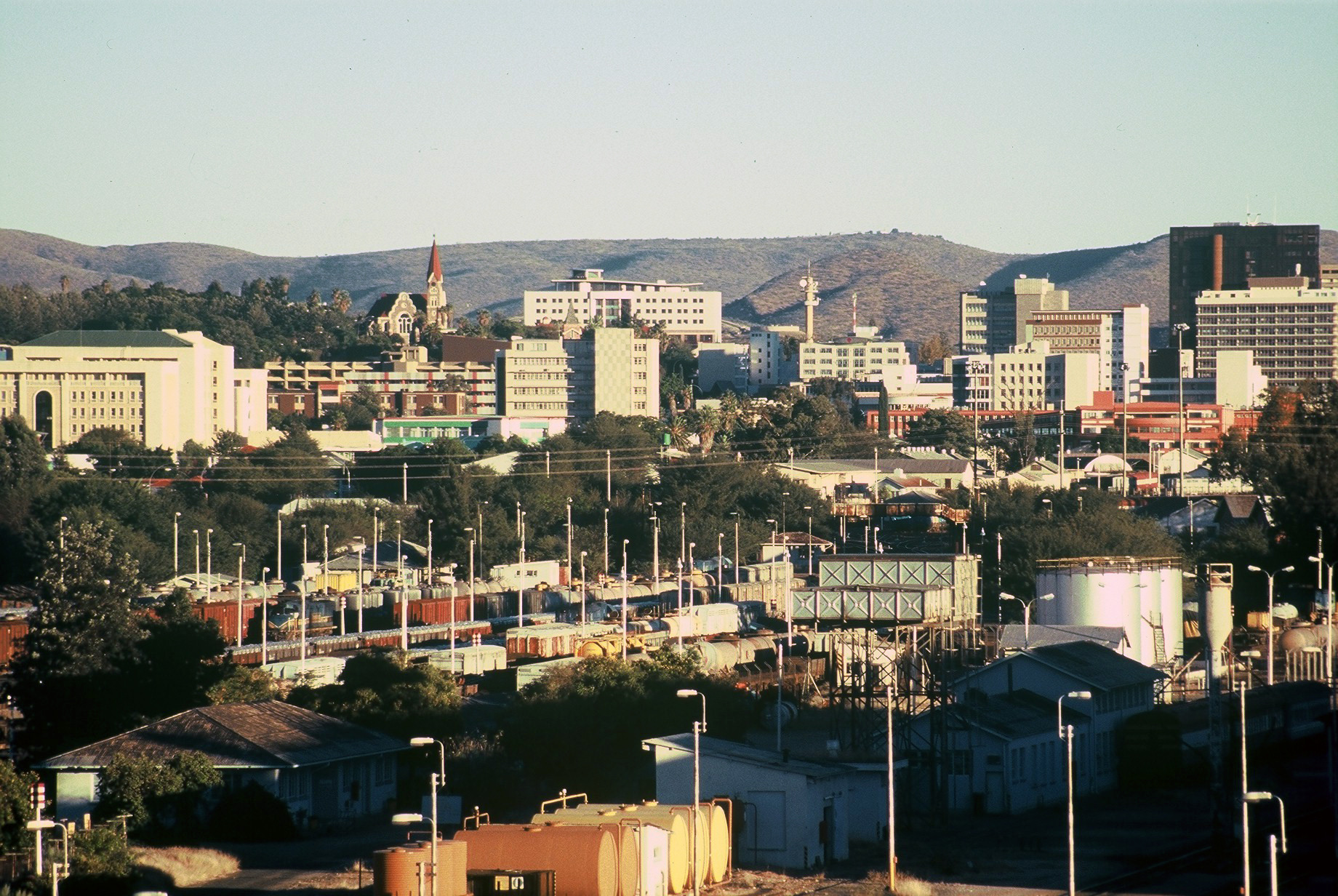
Windhoek, Namibia, Africa


By Jothea Hite

Namibia is a huge country with a small population due to its desert nature. With a population of 2,1 million according to the 2011 census, you will understand why the size of the capital city of the Republic of Namibia is what it is. With only 322 000 inhabitants counted in the same census, it seems like a village compared to capital cities such as London or Paris. Yet, we are a very cosmopolitan city with cultures from all across the globe. I have read reports by travellers that recommend tourists to skip Windhoek and that it is a boring city, but having lived here for nearly 25 years, I beg to differ.
As a melting pot of African, European and also Eastern cultures, I would say that Namibia’s true identity does not lie in its cities and towns, but rather in its natural beauty that spans millions of years.
Windhoek is not hundreds of years old like many European cities. It is only a 174 years old – and that’s taking it back to the settlement by Jonker Afrikaner, an Orlam captain, as a result of a spring that could provide water for his livestock. The German army founded the city again in 1890 after years of hostilities and strife. This brings the age of the city to only 124 years in European terms.
The German influence in architecture is still very evident in the older parts of town. A couple of well-preserved German shop-fronts still grace the main street, Independence Avenue, which in German times was know as Kaiser Strasse.
History is not only German, however. In front of the Tintinpalast – seat of Government situated East of Independence Avenue, you will find Parliament Gardens and a statue of Hosea Kutako, one of the many heroes of the Namibian independence struggle.
Being located at such a high altitude affords Windhoek the most moderate climate in the entire Namibia. Our winter days are basked in sun, with night-time temperatures often dipping to under zero, while our summers can be very hot and dry. Despite our location in a summer rainfall area, Windhoek is termed as semi-arid. In extreme years, we’ve had
virtually no rain, while we can usually expect an average of 300mm per year.
So, what we cherish most is our blue skies! We get depressed when it is dusty and dry and grey, because we are so used to crisp, clear blue skies. Then the mountains surrounding Windhoek stand guard around the Windhoek valley and you cannot but feel at home.
Home is meat in Namibia and you should not leave Windhoek without having a taste of the best beef or game sirloin or fillet you could find. Local delicacies called biltong and and droëwors (dried beef or game meat and dried sausage) are eaten by all; true to our Namibian meat-eating tradition, which is augmented by a good dose of German sausages,  cold meats and of course, beer made in the German tradition.
Windhoek does not have much of a night-life, but you will find many clubs and bars if that is what you want to do in Africa. If you prefer to rather watch the African sunset, make sure that you are on top of the roof of a well-known hotel or at one of the old castles in town. During the day, visit one of the many coffee-shops or restaurants in the town centre to feel the true buzz of life in Windhoek.
Serious party-time is very linked to the German Wika-festival and the Oktoberfest, but also the ǀAiǁGams Festival that is held by the City of Windhoek.
What I love most about Windhoek is the fact that you can drive for five or ten minutes and be out in the country. Windhoek is relaxed and laid-back and that is probably why I would not want to live anywhere else in the world.  

Tuesday, June 4, 2013

Lusaka, Zambia, Africa

Lusaka – A Warm Welcome , Africa


Picture By: http://upload.wikimedia.org/wikipedia/commons/thumb/e/e9/Lusaka_-_Manda_Hill_Shopping_Centre.JPG/220px-Lusaka_-_Manda_Hill_Shopping_Centre.JPG

By Nick-Venter S. Edwards

A small nondescript village in the early 1920s, Lusaka is the bedrock of what is today the Republic of Zambia, a warm country by climate and hospitality.
Its central location, slightly to the south of the country’s centre, merited this village’s promotion to a capital city of the colonial administration of Northern Rhodesia.
Lusaka has rapidly grown into the bustling metropolis that it is today.
It is both the commercial and industrial hub of the country as well as the seat of government and parliament.

Lately it has been choking with an increase in population. Its poor planning has led to the congestion that is an identifying spectre of the sprawling city, with a lot of infrastructure springing up by the day.
The main entry point for most tourists is the Kenneth Kaunda International Airport, the largest facility, just about 25 minutes’ drive from the central business district. Driving from this airport, on Great East Road, gives the visitor a warm welcome to a bustling metropolis. All the way from the airport, the visitor is greeted by fast-paced urban scenery, with the convenience to check into the many amenities at the visitors’ disposal before they even set foot into the centre of the town.

Two big malls, very modern in their nature, and hotels by the side, the entry from the east is more than convenient for the tourist who, in the meantime, would have had a glimpse of the National Assembly.
The central business district is surrounded by a cluster of residential areas that are steadily exploding out of their size pushing the city inwards.

There is Matero, to the north-west of the city, a great historic township. This vast settlement was the hub of the many skirmishes in the struggle for independence. Matero is also the hub of the heavy industries, many of which are mere shadows of the cogs in the industrial machine of the city that they were in 1980s.

Lusaka is home to the country biggest university and

Friday, May 31, 2013

Luxor, Egypt

Come To Visit Our Awesome City Luxor , Egypt, Africa

By Jojo Sam

Come to visit my lovely city, if you are one of those people who admire of visiting famous antiquities, if you passionate to smell of the ancient days, Sure you will think to come to visit Egypt. In Egypt you will find awesome historical places, that historical places starts from Giza pyramids and extend to Valley of the Kings at Luxor. Here at Luxor, you will enjoy with the wonderful worm weather, and a wonderful hospitality of the kind Egyptian people.
Luxor is the most ancient city in Egypt. It lies in Upper Egypt at the north of Aswan. In the past, Luxor was the capital of ancient Egypt. It was called Teba. It was built at the age of the pharaoh Mina. Now it’s called Luxor.
Do you know why Egyptian called it Luxor instead of Teba! I’ll tell you, when the Arabs came to Egypt to conquer it in 640 AC Arabs found a huge number of pharaonic structures and palaces, which make them to name it Luxor ( City of palaces) Because It has a lot of ancient palaces which called Luxor in the Arabic language.

Luxor has the third of the world’s monuments nearly. It has a lot of ancient tombs and temples, such as The Karnak Temple, The Luxor Temple, The Valley of the Kings, The Queen Hatshepsut Temple and The colossi of Memnon.
When you come here, be sure you will enjoy with every moment of your tour. You can enjoy Kebash Road or may you love to sail in a Nail tour in the River Nail. All amazing thoughts you can find it in my city (Luxor) especially if you come at winter, here the weather is worm at winter in a magical way that make all foreigners prefer to vist Luxor in winter.

When you are here, I advise you to take care of taxi drivers, they are so greedy about money. So that you are advised to move with your tour guide in a stated plan and avoid moving separately. In common all Egyptians ( My country people) are so kind welcoming to all coming people as tourism is one of the most important source of national income for all Egypt.
When you decide to come here don’t forget to plan to visit all Christian historical ‎places in Egypt especially the Old ministry at Asuit Mountains where Jesus Christ ‎had visited it during the journey of The Holy Family.‎

Saturday, May 25, 2013

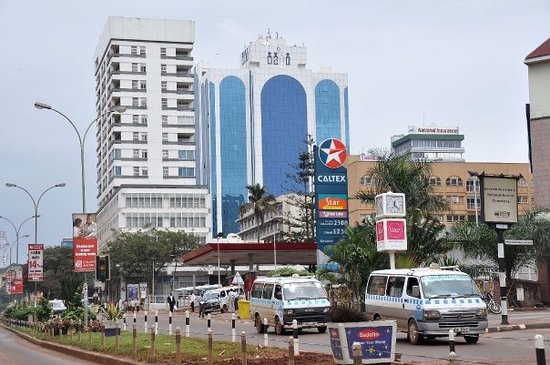
Kampala, Uganda, Africa

Invitation to Kampala -my city.


Kampala is the capital of Uganda and the largest city in the country.  
Location:

Kampala is located in Uganda East Africa and the city’s coordinates are: 00 19N, 32 35E.
Brief History

Kabaka Mutesa 1 had chosen the area that was to become Kampala as one of his favorite hunting grounds. It was made up of hills and wetlands. It was a bleeding ground for many game animals particularly the Impala. When the British colonialists came they named one of the hills the hill of Impala. Due to the large number of impala. The Baganda used this reference in their local language (Luganda) - 'Akasozi K'empala. So K’empala became 'Kampala due to repeated usage, and when the colonialists wanted a name for the city they adopted Kampala.

Major Attractions:
The are several major attractions in Kampala but the main ones are; Kasubi tombs which are located on Kasubi hill 5 kilometers from the city centre. It is a burial ground for 4 kings of Buganda and it is therefore significant for the loyal family and the entire Buganda kingdom. Then we have the Rubaga cathedral located on Rubaga hill. Many religious people come to the cathedral to warship and are one of the landmark buildings in Kampala. 
The Uganda museum is the oldest museum in Uganda formerly it was locate at Fort Lugard on old Kampala hill and now it is on kitante hill.
The bahai Temple located on kikaya hill 4 miles from Kampala city centre. It is the mother temple of Africa.


The Namugongo Martyrs’ shrine is situated 12 kilometers from Kampala city centre in Namugongo.


 It is where the Uganda martyrs were executed by Kabaka mwanga due to their failure to withdraw from their new adopted faith –Christianity. Namugongo shrine has been visited by many people Notably Archbishop Robert Runcie of Canterbury in 1984 and in 1993 pope John Paul II. In the whole country including the city Kampala June 3rd is a public holiday in honor of the massacre of the Uganda martyrs.

Food and accommodation
The hospitality industry in Kampala is well developed as evidenced by the CHOGUM 2007 conference and several international conferences that take place here every year. We have international hotels like the Sheraton hotel, Serena hotel, and Hilton hotel which is now under completion. We have several hotels which have achieved international standards, hotels like Speke Hotel, Emin Pasha Hotel, Fairway Hotel, Protea Hotel Kampala, Munyonyo Commonwealth Resort, and Golf Course Hotel, Grand Imperial, Mosa Court Apartments, Kabira Country Club and several others.
 When it comes to food there are many choices depending on the occasion you can enjoy dinner from a 5 star restaurant you can spend from 50cents USD to your highest limit. In fast food we have international brand like Nandos and Steers both on Jinja road, we have Domino's Pizza and several others.  There are a variety of restaurants to pick from Ugandan and the other available are Belgian, Chinese, Japanese, French, Turkish Mediterranean and Indian.

Night life and partying
Kampala has a very active night life from a slow and quite Ugandan bar to the fire of capital pub past 2: AM Kampala night life does not end well past the next day. I think there are very few cities across this continent that can rival our night life. We have several bars that include Al’s bar in Kansanga, Capital pub in Kabalagala, Rock Garden at speak Hotel, Bubbles O’Leary which is an Irish pub, steak out in Wandegeya; we have several night clubs which include Club Silk and Ange Noir.
Transport


In Kampala there are several means of transport which include bus, Taxi. Here we have to types of taxis one is a 14 sitter and the other we refer to it as special hire taxi. You can also use Bodaboda (Motor bike). You can also get a car from car hire services around the city for a self drive.
Security
Kampala is generally safe both day and night. We Ugandans are some of the most resilient people in the World:  We have seen wars, overthrows, dictators; bombing attacks come and go but for the last 27 years there has been stability in Kampala save for the 2010 terrorist attack.
Welcome to the city that never sleeps.

Nairobi City, Kenya

by  Jacob Muoki

Picture By: http://images.businessweek.com/ss/09/03/0304_difficult_cities/image/008_nairobi.jpg


Nairobi City, Kenya Brief History Established in 1889 during the building of the Kenya-Uganda railway, Nairobi stands as the Kenya’s capital and East Africa’s most populous city. It’s the most industrialized city in the country and is inhabited by people of all walks of life and members of the 42 different Kenyan tribes. Nairobi is a regional business hub and hosts the United States Embassy (the biggest in East Africa) and the United Nation’s UNEP and UN-Habitat headquarters. The city’s growth as a technology hub in the entire continent of Africa has attracted the attention of technology giants such as Google and Cisco Systems, who have established their continental headquarters there.
Major Attractions The main tourist attraction in Nairobi is the Nairobi National Park, the only one in the world located in a capital city. The park hosts a wide array of wildlife including cheetahs, buffaloes, and hyenas and over 400 species of birds. Other attractions in the park include an animal orphanage and the Safari Walk. Located 7 kilometres from the CBD, the National Park can be accessed via road or air (Jomo Kenyatta International Airport and Wilson Airport).
Food and Accommodation Nairobi hosts several world-class hotels, which tourists and other visitors may find suitable for short-term accommodation. The Sarova Stanley, Intercontinental, Hilton, Nairobi Serena and Norfolk are some of the luxury hotels located in the heart of the city. The Safari Park Hotel is 15 minutes drive from the CBD off Nairobi-Thika super highway. The hotels serve a wide range of international cuisines as well as the country’s popular version of barbecued meat that the locals refer to as “Nyama Choma”.

Nightlife and Partying Many tourists don’t leave Nairobi before they’ve visited the Carnivore restaurant, which is home to the Simba Saloon night club. The club is located about five kilometres from the CBD towards Langata. Other night clubs in the city include Betty’s in the CBD and Changes in Westlands area. There, revellers are treated to a combination of hip hop music, reggae and local tunes popularly referred to as “Genge” or “Kapuka”.
Transport International visitors arrive at the city via Jomo Kenyatta International Airport in Nairobi. Alternatively, visitors entering Kenya via Moi International Airport in Mombasa may commute by rail, road or air to Nairobi. Jomo Kenyatta International Airport is about 15 kilometres from the CBD and is accessed via cabs (taxis). Visitors from Mombasa may choose to commute by train, which is relatively slow and may take up to 16 hours to get to Nairobi. Movement around the city or to towns nearby is possible via taxis or car hire services. Many tourists don’t use public transportation except in cities served by rail or long-distance luxury bus companies. This is because only these guarantee passenger safety and professionalism.
Security Nairobi’s CBD and all other areas of tourist interests are for the most part secure. Ever since the 1998 bombings of the American embassy in Nairobi, security has been beefed up around the city and an elite tourist-protection police unit set up. However, the American government has issued and lifted travel advisories against Nairobi more than once since 1998. Thus, the city, especially US, European and Israeli interests, remain potential targets of terror attacks. However, visitors that avoid city estates and areas such as the Kibera slums and Eastlands remain safe from day to day threats to security.

Wednesday, May 22, 2013

Mombasa Kenya

Mombasa My City

By Mwanaisha Gelleh    


The city of Mombasa is listed the second largest in Kenya after Nairobi the country’s capital city. Mombasa is located at the Kenyan coast on the Indian Ocean. It is an Island which is separated from the mainland by two major creeks namely Tudor and Kilindini. People connect to the city by means of ferry transport from south coast while a bridge is used by motorist and commuters at the northern side of the city. The city is well developed with good infrastructure. An international airport known as Moi international airport serves both local and international travels. The roads within the city are welcoming and ensure good and safe drive to motorists. The road traffic is high in morning and evening hours as people are always at rush going or leaving to work as well as school going children. It is therefore essential for one to choose appropriate time to use the roads to avoid being held up by traffic jams. Commuter buses are the major means of transport. Being an industrial city, Mombasa is densely populated by different tribes while the habitants are the Swahili people. The language most spoken by the city people is Swahili and Islam is the major religion practiced in Mombasa. The Swahili people are so welcoming and generous. The most likely fast foods to get at the city are potato fries served with chicken, coconut rice served with fish, samosas, kebabs and spiced tea. People like partying on weekends along the beaches. Mombasa boasts of having diversity of tourist attraction sites which is one of the major sources of revenue in the city. Several sandy beaches are found along the coastline. There is Fort Jesus situated along the Indian Ocean within the city centre. Fort Jesus serves as a historical site whereby different artifacts that were found in the 16th century are preserved. They range from household goods, ammunition and different equipment that were used in slave trade in the 16th century. Fort Jesus also serves as an educational centre for those who are pursuing historical education. A trip to Mombasa is not complete without visiting this historic site. Another tourist attraction site in Mombasa is Mamba village.


Mamba is a crocodile in swahili, so Mamba village is a crocodile rearing farm and it is rated as the largest in East Africa. It is here where all your questions about crocodiles will be answered. There is variety of crocodiles and the good news to most visitors is the existence of over 100years old crocodile within the farm. Several parks are found in this city, there is Haller park which is a home of different animals and reptiles. Animals found include antelopes, giraffes, hippos, monkeys, tortoises and variety of snakes. There are also 100+ plants species. At the southern coast, there located Shimba Hills National reserve and Mwaluganje Elephant Sanctuary which are homes for forest elephants. When choosing a place to tour, come to Mombasa city and definitely you will have a story to tell.